At some point during a trip to Japan, you may find yourself looking at a sweets counter without knowing what anything is. One sweet is pink and wrapped in a leaf. Another looks like a tiny seasonal flower. Somewhere else, a fish-shaped cake is being cooked on an iron griddle.
Knowing a few names helps, but memorizing a long list of Japanese sweets does not.
A better way to understand Japan’s traditional confectionery is through taste, texture, season and place. Some are chewy like mochi. Others are soft cakes, cool jellies or warm street snacks.
Here is a good place to start.
| If you want… | Try | What to expect |
|---|---|---|
| Something familiar if you already like mochi | Daifuku | Soft, chewy mochi around a filling |
| A warm street snack | Taiyaki | Fish-shaped cake with red bean, custard or another filling |
| Something without red bean | Mitarashi dango or custard taiyaki | Chewy dumplings with sweet-soy glaze, or warm cake with custard |
| A spring sweet | Sakura mochi | Soft rice sweet, bean paste and a salted cherry leaf |
| Something cooling in summer | Warabi mochi | Soft, slippery and almost jelly-like |
| An autumn specialty in Gifu | Kuri-kinton | A small chestnut confection with concentrated chestnut flavor |
| The refined matcha pairing | Nerikiri | Soft seasonal confection shaped into flowers, leaves and other motifs |
| A gift that travels better than fresh mochi | Packaged yokan or baked manju | More shelf-stable than fresh wagashi; always check storage instructions |
What is wagashi?
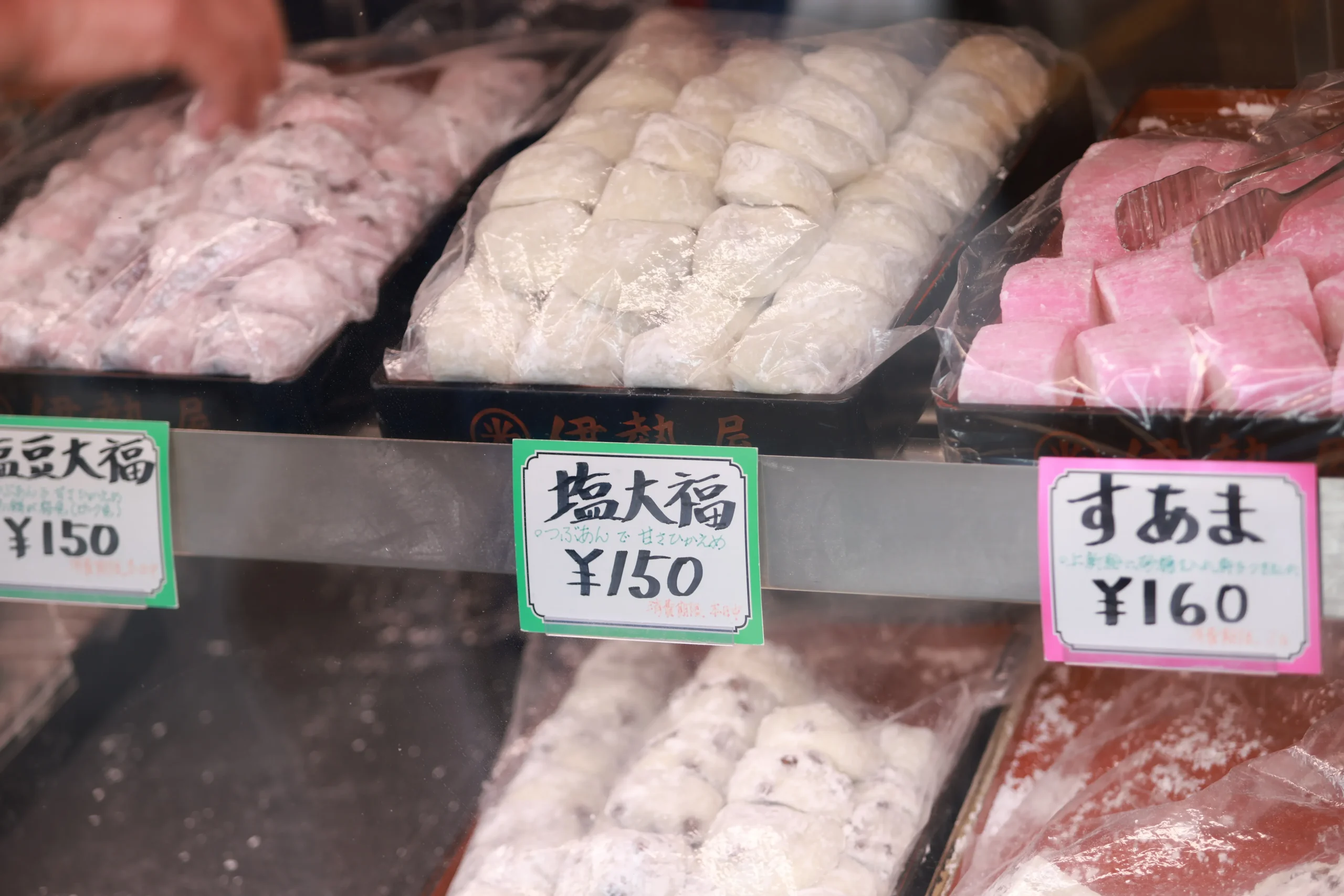
Wagashi is a broad term for traditional Japanese confectionery. It does not describe one particular recipe.
Common ingredients include rice and rice flour, sugar, sweetened beans, agar, sesame and chestnuts.
Many traditional wagashi use mostly plant ingredients, but wagashi is not automatically vegan. Some baked sweets use eggs, taiyaki batter may contain milk or egg, and modern versions may include cream. If you have dietary restrictions, check the individual sweet rather than relying on the category name.
What does wagashi actually taste like?
There is no single wagashi flavor.
A strawberry daifuku, a firm slice of yokan, a warm taiyaki and a chestnut-based kuri-kinton can taste completely different.
One flavor you will encounter often is sweet red bean paste, made from azuki beans cooked with sugar. It comes in smoother versions and chunkier versions where more of the bean texture remains.
What if you don’t like sweet red beans?
Sweetening azuki does not remove its underlying bean flavor. The result is sweet but also earthy.
Some people immediately enjoy that combination. Others find “sweet beans” unfamiliar or simply do not like it.
That does not mean wagashi as a whole is not for you.
Try a custard-filled taiyaki when available, mitarashi dango with its sweet-and-salty soy glaze, chestnut-based kuri-kinton, or warabi mochi served with roasted soybean flour and dark sugar syrup. Fruit and cream-filled sweets can also be good alternatives, although fillings vary, so check if avoiding red bean matters to you.
If you are curious enough to try azuki again, compare the smooth and chunky styles. The chunkier paste keeps a more obvious bean texture, while the smooth version can feel quite different.
Start with the sweets you can already picture
Daifuku: the familiar mochi choice
If you already enjoy mochi, daifuku is an easy starting point.
Soft mochi surrounds a filling, traditionally sweet red bean paste. Modern versions often add fruit or cream. Strawberry daifuku is especially approachable because the fresh fruit adds acidity to the chewy, sweet combination.
Fresh daifuku is best eaten reasonably soon after buying it. The texture changes as the mochi dries.
Taiyaki: the fish-shaped street snack
Taiyaki looks like a fish but contains no fish.
It is a cake cooked in a fish-shaped iron mold, traditionally filled with sweet red bean paste. Custard and other fillings are also available at many shops.
Fresh from the iron, the outside can have slightly crisp edges while the inside remains soft and warm.
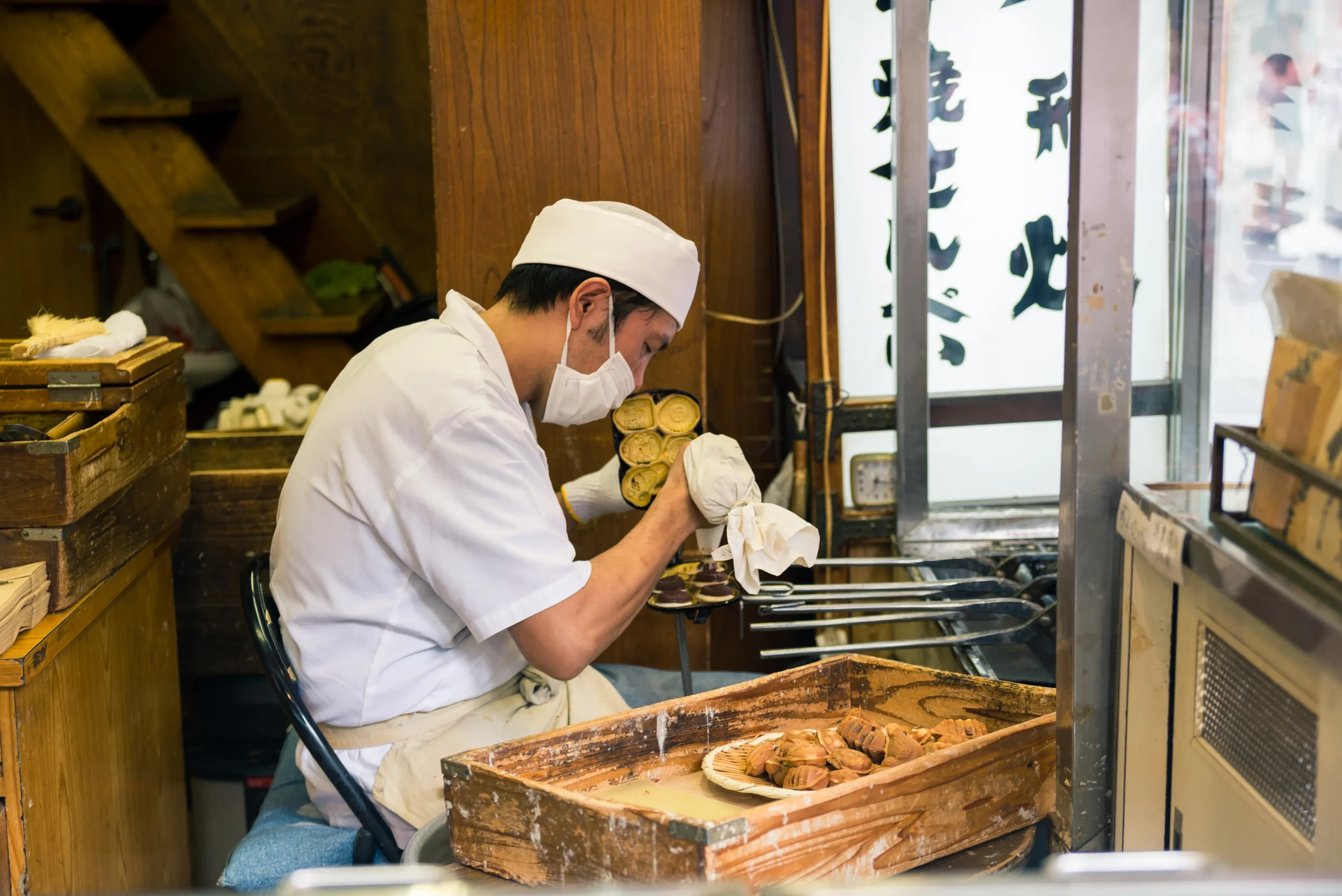
It is also a good example of why wagashi does not have to be formal. Buying a taiyaki while walking through a shopping street can be just as meaningful an introduction as sitting down in a tea room.
Dorayaki: two little cakes around a filling
Dorayaki consists of two soft, pancake-like cakes around a filling, most traditionally sweet red bean paste.
Packaged versions are easy to find, making it one of the less intimidating ways to try a traditional Japanese sweet without visiting a specialist shop.
Dango: chewy dumplings on a skewer
Dango are small rice-flour dumplings, usually served on skewers.
For someone unsure about red beans, mitarashi dango is particularly useful to remember. Its glossy sauce combines sweetness with soy sauce, creating a very different flavor from bean-filled wagashi.
Yokan: a sweet firm enough to slice
Yokan is usually made with sweet bean paste, sugar and agar, which gives it a firm set.
Its appearance can suggest jelly, but the texture is denser than many visitors expect. Packaged yokan also tends to travel better than fresh mochi-based sweets, making it a practical option when looking for gifts.
Nerikiri: sweets shaped by the season
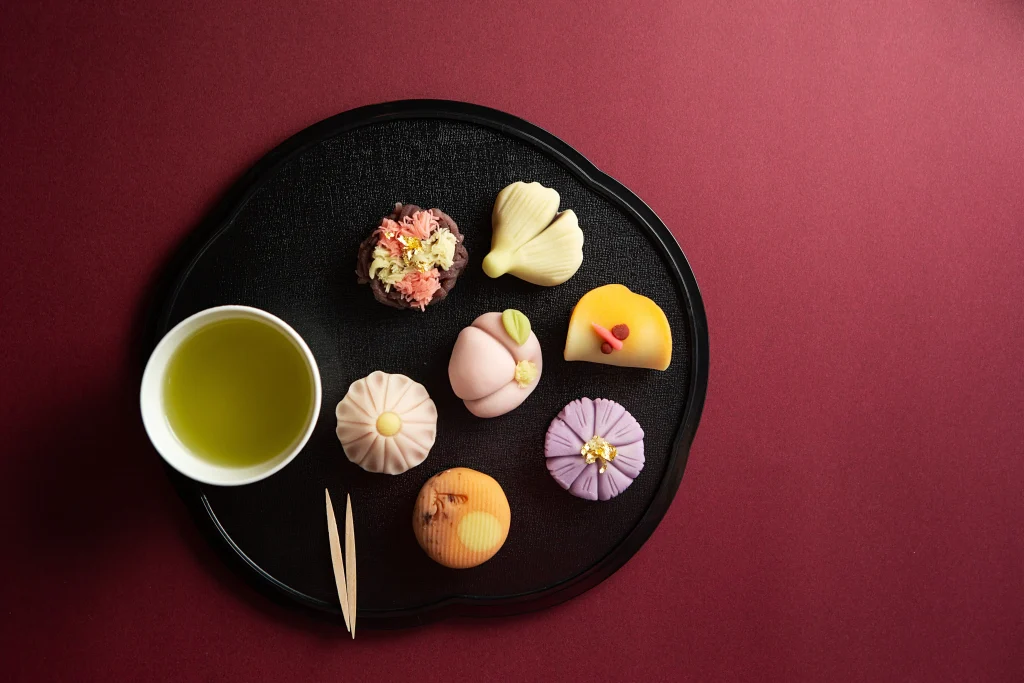
Nerikiri is the small, carefully shaped wagashi often photographed beside matcha.
The confectioner may turn the soft paste into a cherry blossom, autumn leaf or another seasonal motif. Instead of learning the technical names for every component, look first at what the sweet is trying to represent.
Its sweetness also makes more sense when paired with the bitterness of matcha.
Warabi mochi: a completely different kind of “mochi”
Despite the name, traditional warabi mochi is starch-based rather than ordinary pounded-rice mochi.
Its texture is much softer and looser, almost somewhere between mochi and jelly. It is often served with roasted soybean flour and dark sugar syrup, producing a nutty, caramel-like flavor rather than a red-bean taste.
Wagashi becomes easier to remember when you eat it in season
Seasonality is often mentioned when explaining wagashi, but it becomes much more meaningful when you can connect a particular sweet with a place and a moment during your trip.
Spring: sakura mochi during cherry blossom season
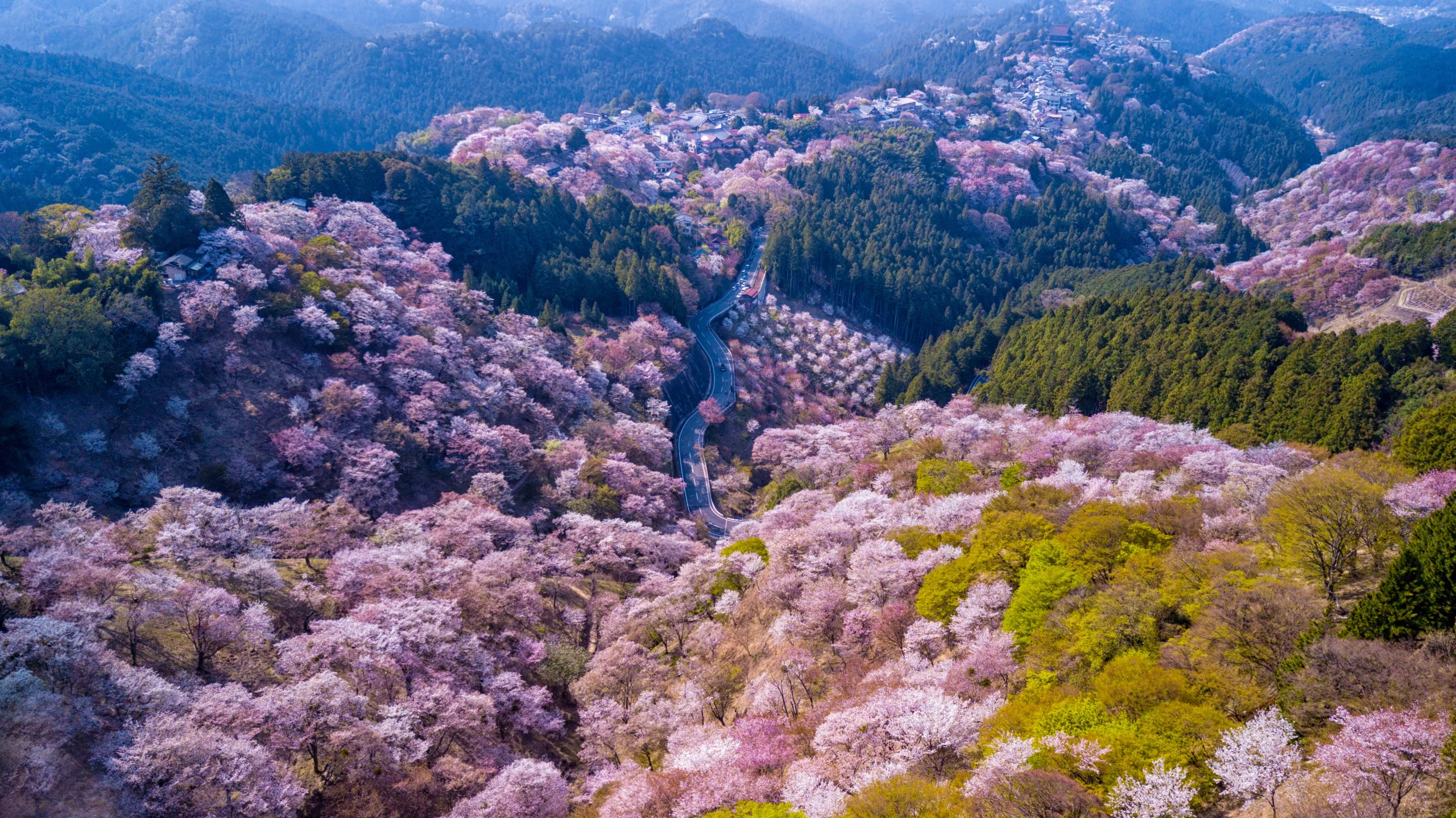
Before sitting beneath the cherry trees for a picnic, you may notice small pink sweets wrapped in dark green leaves appearing in confectionery shops.
This is sakura mochi, one of Japan’s characteristic spring sweets.
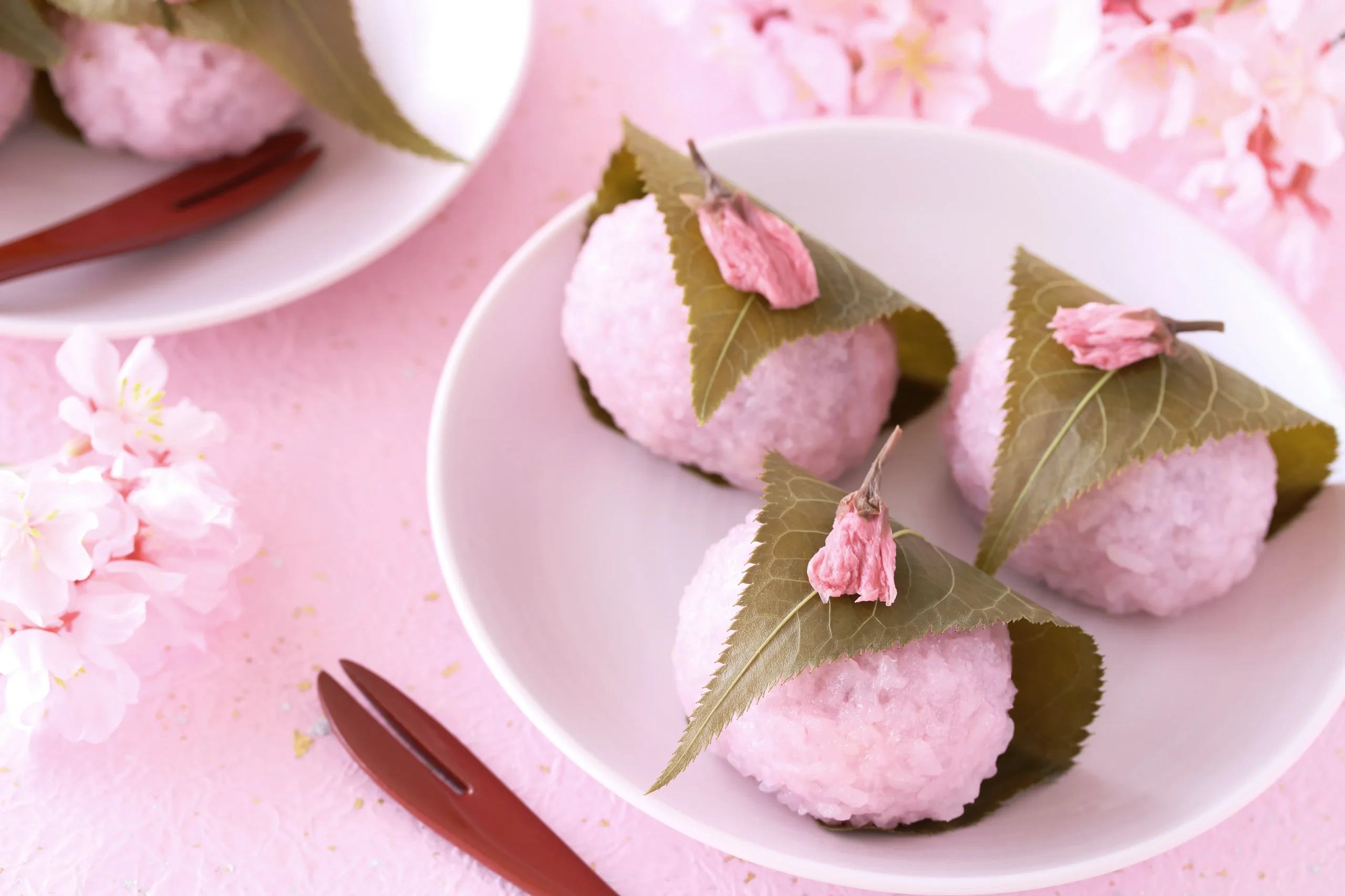
Inside is sweet bean paste. Around it is either a rice-based or crepe-like wrapper, depending on the region. The salted cherry leaf adds aroma and a slight salty contrast.
There are two major styles.
In Kansai, including Kyoto and Osaka, sakura mochi usually has a visibly textured rice exterior and a soft, chewy bite.
In Kanto, including Tokyo, the traditional version uses a smoother, thin crepe-like wrapper folded around the filling.
The Tokyo style has been associated with the area around Chomeiji near the Sumida River since the Edo period, when sakura mochi was sold to people visiting the area for cherry blossom viewing. That link between the sweet and spring is therefore much older than modern seasonal marketing.
Do you eat the cherry leaf?
You can, but you do not have to.
The salt-pickled leaf is edible. Some people eat it together with the mochi for its salty flavor and aroma, while others remove it because they prefer the softer texture of the sweet alone.
For a first try, take one bite with the leaf and one without. You will quickly know which you prefer.
Read more: Hanami in Japan: How to Enjoy Cherry Blossom Viewing
Early summer in Kyoto: Minazuki
Around the end of June, Kyoto has a much more local seasonal sweet.
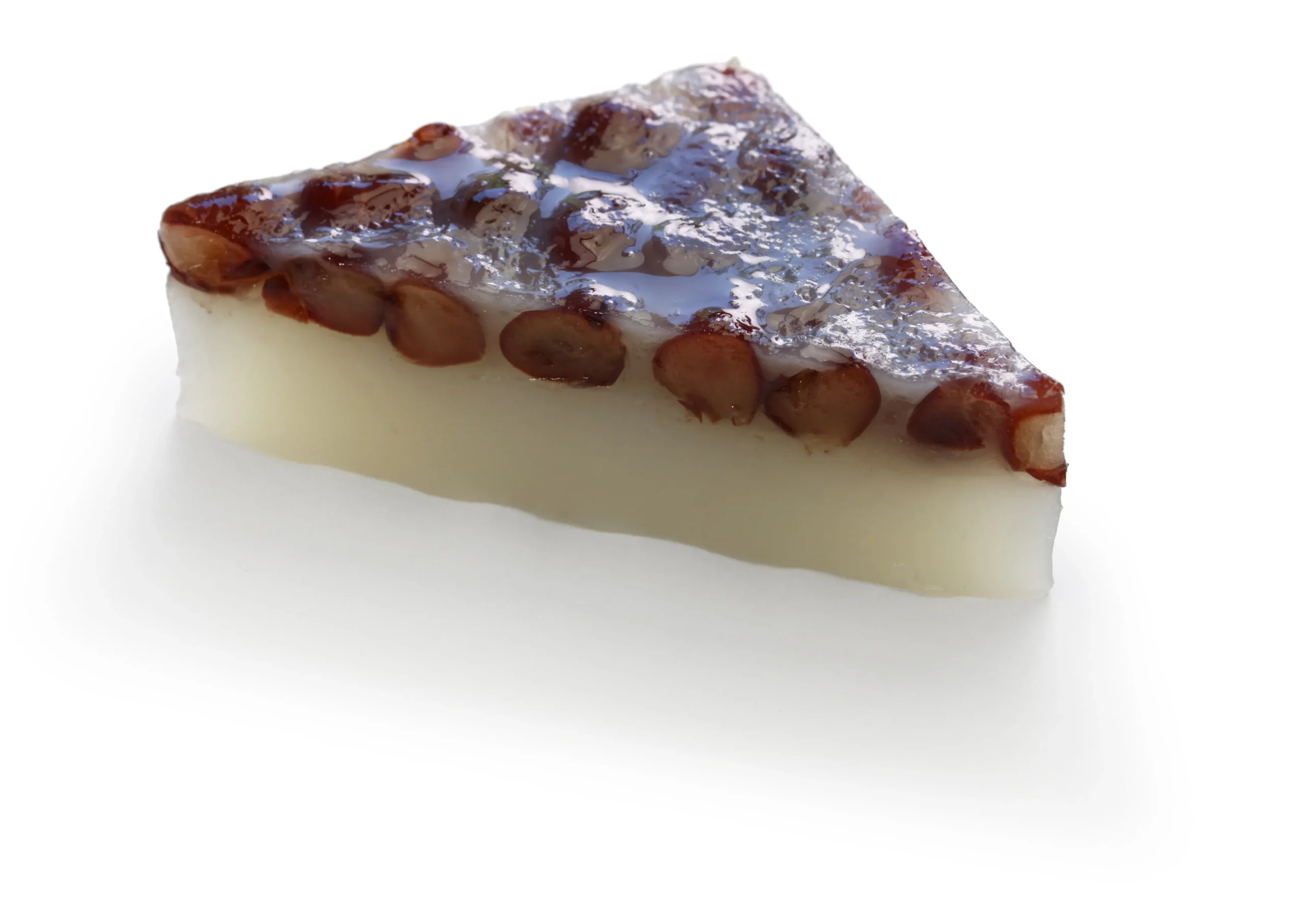
Minazuki is a triangular steamed confection topped with sweetened azuki beans. Its triangular shape represents ice, an image of coolness as Japan moves into the humid summer.
It is traditionally associated with the mid-year purification period around June 30, when shrines hold ceremonies marking the halfway point of the year.
If you are in Kyoto at that time, you may see large rings made from reeds at shrines and minazuki appearing in wagashi shops. It is a small example of how a food can make a seasonal custom much easier to notice and remember.
As summer continues, wagashi can become lighter in appearance and texture. Clear or softly set sweets made with agar or starch evoke water and coolness, while warabi mochi offers a chilled alternative to denser mochi sweets.
Autumn: chestnut sweets in Gifu
Autumn brings chestnuts.
In Nakatsugawa in eastern Gifu, kuri-kinton is a small confection made primarily from chestnuts and sugar, usually shaped to resemble a chestnut.
Nakatsugawa is said to be the birthplace of this style of kuri-kinton, and local confectioners make their own versions during chestnut season.
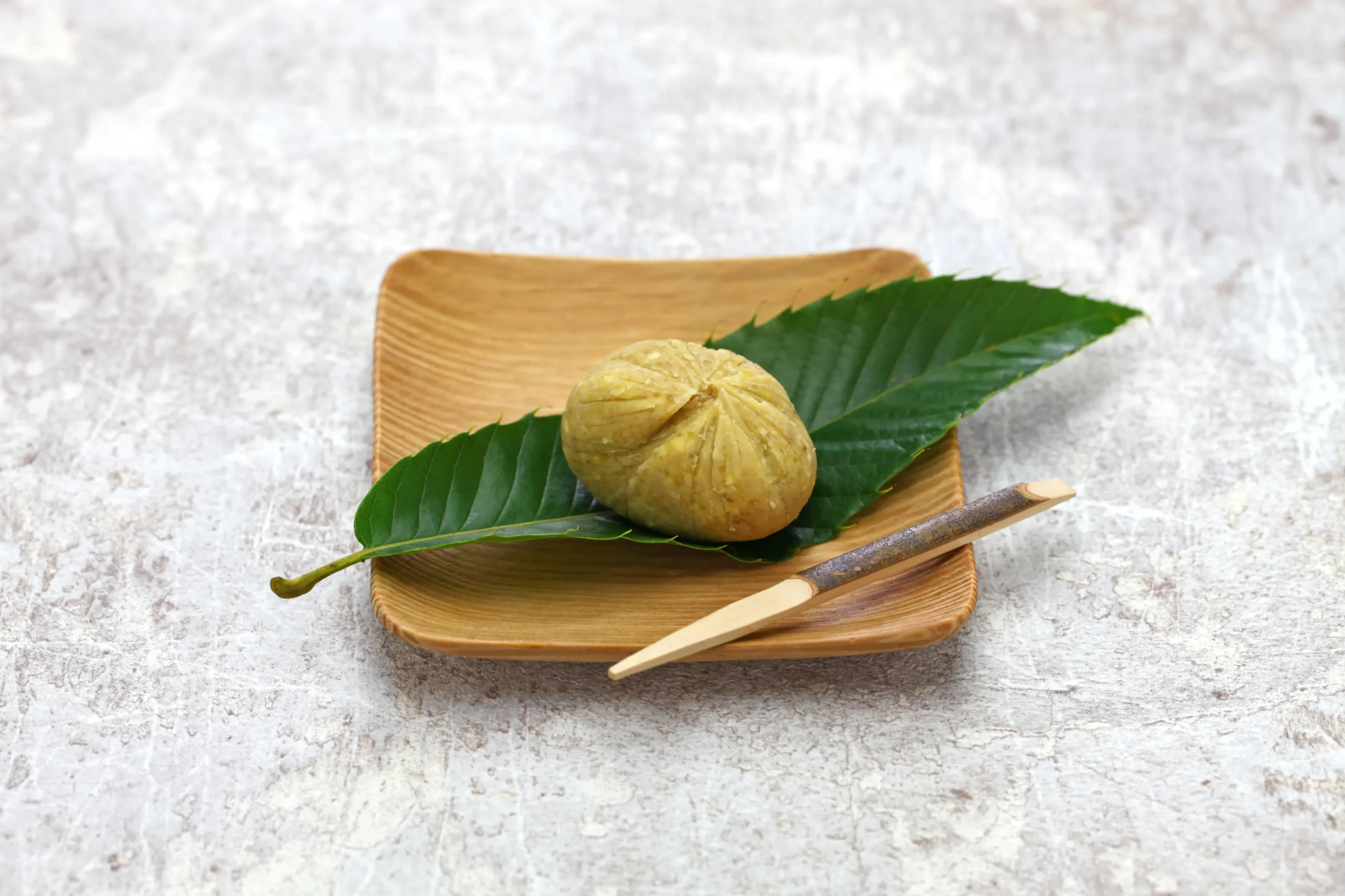
If your autumn trip takes you through the mountain areas of Gifu, the connection between the sweet and its surroundings is easy to understand. Chestnuts are part of the season itself. When autumn colors begin appearing across the hills, a small chestnut confection feels less like an item from a nationwide list and more like something belonging to that particular place and time.
One detail is worth remembering when searching for it online. Nakatsugawa kuri-kinton is different from the New Year dish with the same name, which uses chestnuts with a sweet yellow paste.
Read more: What to Do in Gifu
Winter: taiyaki while it is still hot
Not every seasonal food needs a complex explanation.
On a cold day, freshly cooked taiyaki is appealing because it is warm.
The outer cake is best before it softens, and eating one while walking through a shopping street is one of the simplest ways to experience Japanese confectionery as part of ordinary sightseeing.
That everyday side of wagashi is just as important as the small seasonal sweets served with tea.
A little history makes more sense once you know the food
Japanese confectionery developed gradually through outside influences, changing ingredients and changing ways of eating.
Some early sweets were influenced by food introduced from China. One example is karakudamono, fried confections made from grain-based dough. Forms of these eventually disappeared from ordinary everyday eating while surviving in ceremonial contexts.
Tea culture gave sweets another role. Strong tea and sweetness worked together, helping shape the tradition of serving a small confection alongside matcha.
Later, during the Edo period, greater sugar availability and prosperous towns supported the development of many confectionery styles. The history becomes easier to understand when you can still see traces of it today: sakura mochi associated with blossom viewing, regional sweets based on local crops, street snacks and carefully shaped tea confections all belong to different sides of the same story.
Where should you actually try wagashi?
You do not need to start at a formal tea house.
Convenience stores and supermarkets are the easiest introduction. They often carry daifuku, dorayaki, dango and seasonal sweets. They are useful when you simply want to try something without planning around it.
Shopping streets and food stalls are better for sweets that should be eaten fresh. Taiyaki and grilled dango make much more sense straight from the stall than after spending hours in a bag. Shopping streets such as Osu in Nagoya are good examples of places where sightseeing and casual snacking naturally overlap.
Department-store food halls are useful when you want to compare several confectioners at once. Seasonal sweets, packaged gifts and established brands are usually displayed clearly, so you can browse without committing to a specialist shop.
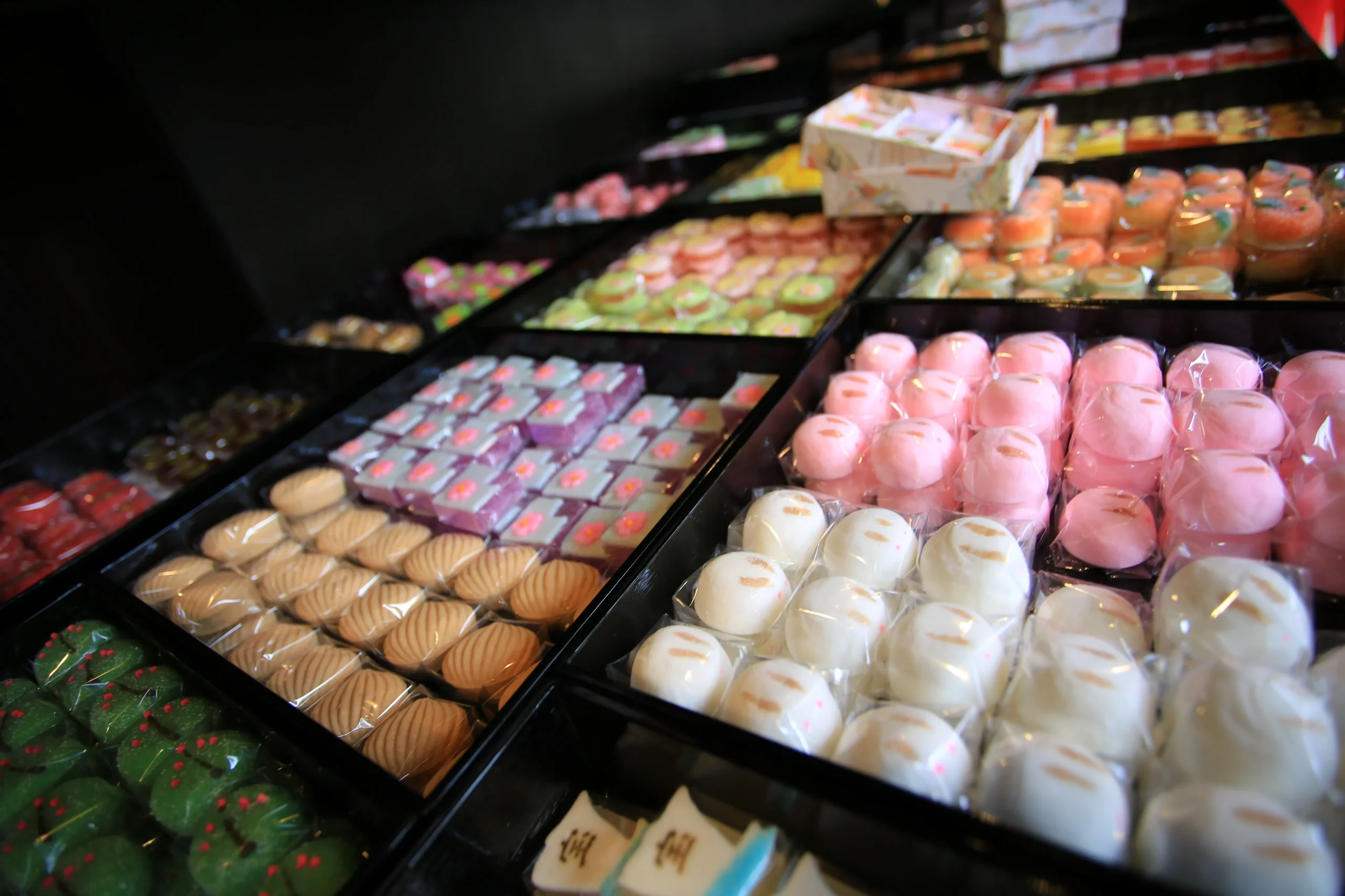
Traditional confectionery shops become worth seeking out once wagashi itself is part of your interest. Kyoto is closely connected with refined seasonal confectionery and tea culture, while Kanazawa also has a particularly strong tradition of sweets connected with tea.
Tea houses and gardens show the more deliberate side of wagashi. This is where a seasonal nerikiri with matcha can make the relationship between sweetness, design and tea much clearer.
You do not need a tea ceremony to eat wagashi “properly.” It is simply another way to experience it.
Read more: Tea Ceremony in Japan
Which wagashi can you bring home?
Fresh wagashi is often food for today, not food for the flight home.
Daifuku, dango and delicate fresh sweets are usually best eaten soon after purchase. Taiyaki also loses much of its appeal once it is no longer fresh and warm.
For gifts, packaged yokan, baked manju and other products with longer shelf lives are usually more practical. Storage requirements differ by product, so check the best-before date and instructions on the package or ask the shop staff.
Department-store counters and specialist wagashi shops are particularly useful when choosing something that needs to survive several days of travel.
Making wagashi changes how you look at it
Eating a carefully shaped wagashi tells you what it tastes like. Making one yourself explains why such a small sweet can require so much attention.
In hands-on workshops, travelers may shape soft confectionery paste into seasonal flowers or other motifs using simple tools. Seeing how small changes create petals, lines and color gradations makes the finished sweets easier to appreciate.
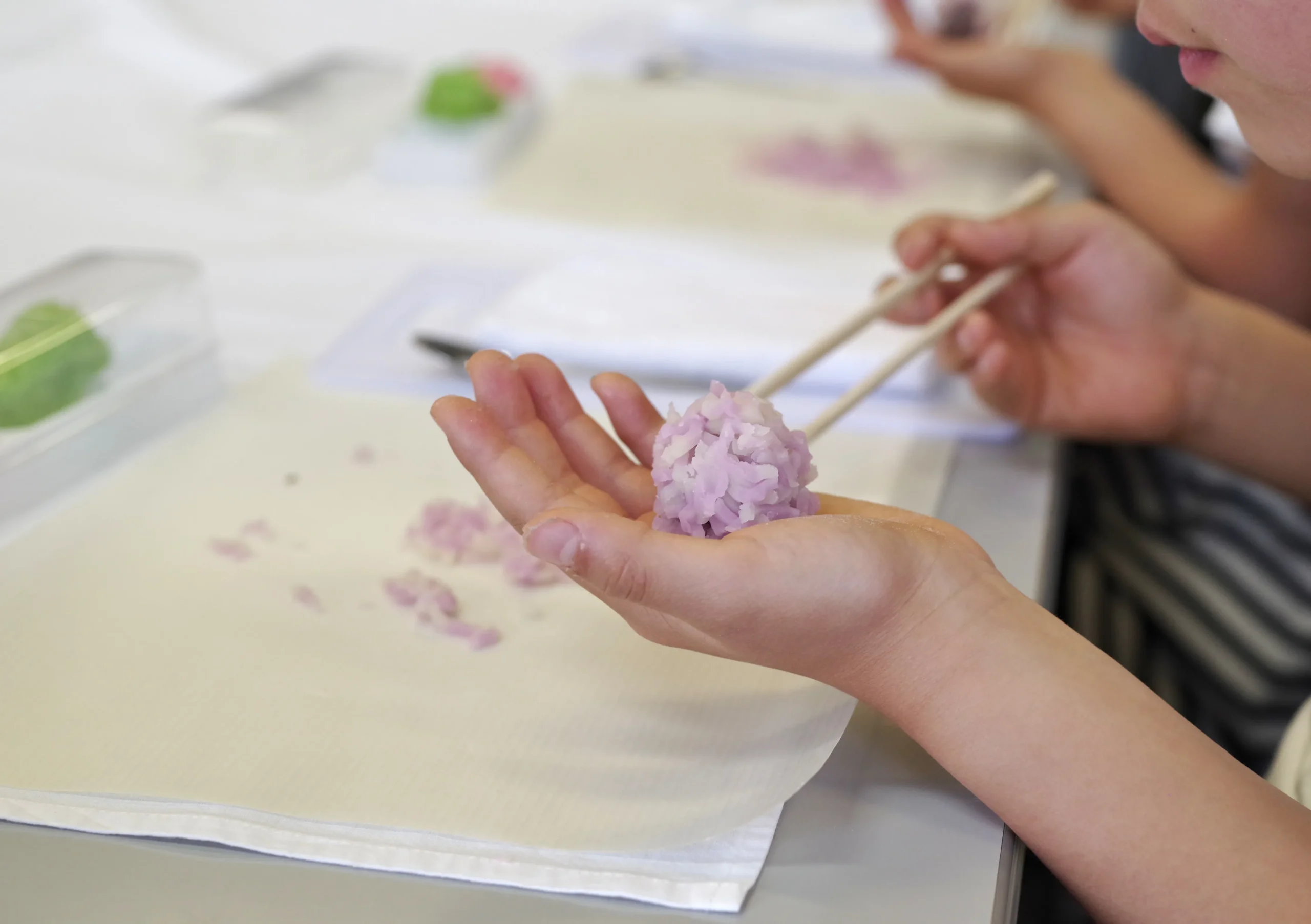
Some experiences combine wagashi making with matcha, bringing together the two traditions discussed throughout this article.
If Japanese food, traditional crafts or seasonal experiences are important parts of your trip, ENJYU can help fit experiences such as wagashi making, tea or regional food stops naturally into a wider itinerary.
You do not need to remember every name
You will probably forget some of the Japanese words in this guide. That is fine.
Remember the pink sweet wrapped in a cherry leaf when the trees bloom. The chestnut confection from Gifu in autumn. The warm fish-shaped cake from a shopping street. The tiny seasonal flower beside a bowl of matcha.
Once wagashi is connected with taste, season and place, the names become easier to recognize when you encounter them in Japan.
And if the first sweet red bean filling is not for you, try something else. Wagashi is a much larger world than mochi and red beans.