Sukiyaki is one of Japan’s most iconic traditional nabe (hot pot) dishes. In this article, we will provide a detailed explanation of sukiyaki from a Japanese perspective, covering its fundamental aspects, including key ingredients, cooking methods, and regional variations. We hope this guide serves as a useful reference.
What is Sukiyaki?
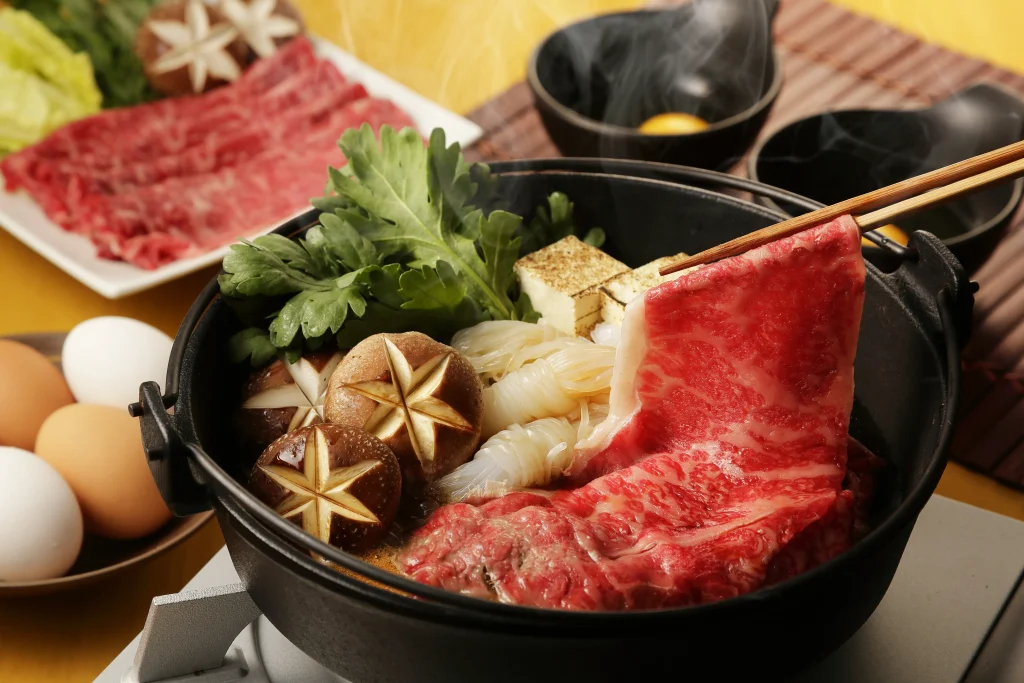
Sukiyaki is one of Japan’s representative hot pot dishes made with wagyu (Japanese beef). It is especially popular during the winter season and is often enjoyed on special occasions due to the use of premium ingredients.
The defining feature of this dish is warishita, a sweet and savory sauce made from soy sauce, sugar, and sake, which is used to simmer or grill beef and vegetables in a shallow iron pot. The beef commonly used is wagyu, known for its rich fat marbling and deep umami flavor. It is sliced thinly to ensure it cooks quickly. Another characteristic of sukiyaki is its unique dining style—rather than being served pre-cooked, the ingredients are prepared at the table, allowing diners to enjoy the process of cooking and eating at their own pace.
There are several theories about the origin of the name “sukiyaki.” One theory suggests that during the Edo period, farmers used the flat blade of a suki (plow) as a substitute for an iron plate to grill meat and vegetables. Another theory is that the name comes from sukimi, a term used to refer to thinly sliced meat. Understanding this background provides insight into how sukiyaki has evolved alongside Japanese food culture.
The History of Sukiyaki
In reality, sukiyaki became a widely enjoyed home-cooked dish only in modern times. This is closely tied to major shifts in Japan’s food culture throughout history.
In Japan, Buddhist teachings spread during the Asuka period, prohibiting the killing of animals. As a result, for approximately 1,200 years until the Meiji era, eating four-legged animals was generally banned, and meat consumption was almost nonexistent in Japanese diets. Toward the end of the Edo period, some people secretly ate beef, but its unfamiliar aroma made many feel uncomfortable.
However, during the Meiji era, Western culture rapidly entered Japan, and the government encouraged meat consumption. As a result, beef dishes gradually gained acceptance, and the style of sukiyaki as we know it today was established. In other words, rather than being a dish with deep historical roots, sukiyaki is a symbol of Japan’s modernization, reflecting a fusion of Japanese and Western culinary traditions.
What is “Wagyu,” the Beef Used in Sukiyaki?
The wagyu used in sukiyaki refers to specific breeds of domestically raised Japanese cattle that meet strict breeding standards. Since raising wagyu requires a great deal of time and effort, it is highly valued even internationally as a premium ingredient. In sukiyaki, thinly sliced wagyu is used, allowing its characteristic sweet fat and rich umami flavor to blend harmoniously with the warishita (sukiyaki sauce) broth, creating a luxurious taste.
In Japan, different regions produce their own branded wagyu, with Kobe beef, Matsusaka beef, and Omi beef being particularly famous. One unique pleasure of sukiyaki is the opportunity to savor these regional differences in wagyu.
Ingredients Used in Sukiyaki
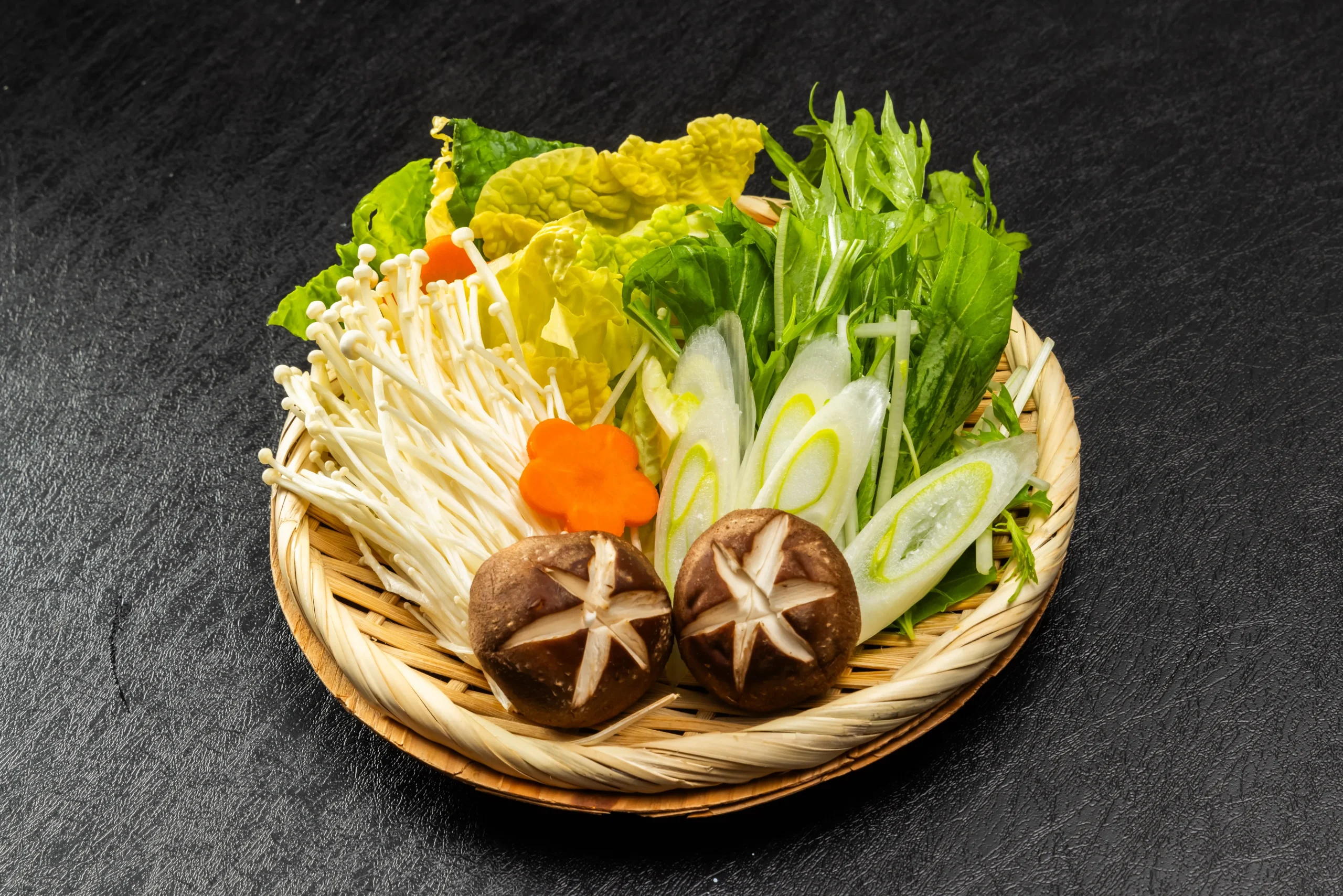
The standard ingredients for sukiyaki primarily consist of beef, vegetables, tofu, and shirataki (konjac noodles).
The main ingredient is thinly sliced beef, which is typically wagyu. Next, yaki-dofu (grilled tofu) is an essential component, as it holds its shape well and absorbs flavors beautifully, making it indispensable in sukiyaki.
Common vegetables include Chinese cabbage, Japanese long green onion, carrot, and Japanese mustard greens. Hakusai absorbs umami flavors easily and develops a soft texture, while naganegi enhances the dish by adding a natural sweetness and balancing the overall flavor. Additionally, shirataki is a common ingredient. Despite being low in calories, it adds volume and texture, making sukiyaki a more satisfying dish.
Furthermore, enoki and shiitake mushrooms are classic additions. The umami-rich aroma of mushrooms spreads throughout the dish, adding depth to the flavor. Chrysanthemum greens are also sometimes included, but due to its distinct bitterness, some people choose to omit it based on their preference.
Seasoning of Sukiyaki
To authentically recreate sukiyaki, focusing on seasoning is more important than just selecting the right ingredients.
Sukiyaki’s flavor is defined by warishita, a sauce that balances key seasonings. Below is the basic recipe for warishita:
- Soy sauce: ½ cup
- Mirin (Japanese sweet rice wine): ½ cup
- Sake: ½ cup
- Sugar: 3 tablespoons
- Dashi broth: ½ cup
This sweet-savory warishita enhances the umami of both the meat and vegetables, creating sukiyaki’s distinctively rich and deep flavor. As the ingredients simmer, the warishita is gradually absorbed, intensifying the taste. This transformation into a thick, flavorful broth is one of sukiyaki’s greatest appeals.
Two Styles of Sukiyaki | Kanto Style and Kansai Style
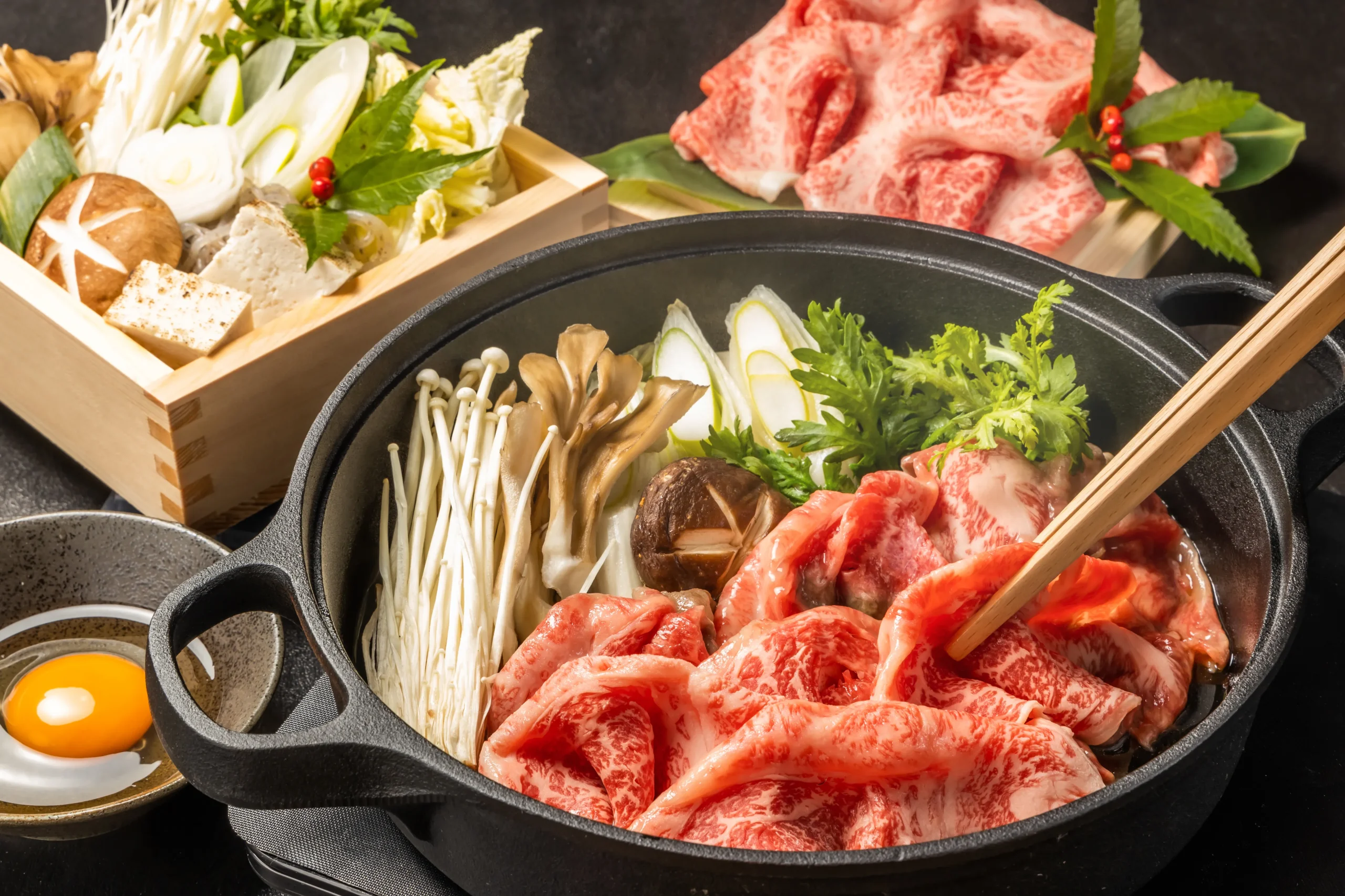
Japanese cuisine varies greatly by region, and sukiyaki is no exception. The way sukiyaki is prepared differs between Kansai (Western Japan) and Kanto (Eastern Japan). Generally, Gifu Prefecture serves as the dividing line, with each region developing its own unique cooking method.
Kansai-Style Sukiyaki
Kansai-style sukiyaki is characterized by a cooking method that maximizes the umami of beef. The key feature is that the beef is first seared in beef fat before adding warishita, allowing the meat’s natural flavors to stand out. In Kansai, it is also common to include ingredients such as fu (wheat gluten cakes) and onions, reflecting regional preferences and variations.
- Heat a sukiyaki iron pot and melt beef fat.
- Spread out the beef slices and quickly sear them to develop a rich aroma.
- Add warishita to the seared beef and coat it well with the sauce.
- Add the remaining ingredients (tofu, shirataki, vegetables, etc.) and simmer, allowing the flavors to blend.
With this method, the umami of the beef is directly enjoyed, while the additional ingredients absorb the rich, concentrated flavors of the sauce. This simple yet flavorful approach makes Kansai-style sukiyaki unique.
Kanto-Style Sukiyaki
Kanto-style sukiyaki is characterized by a slow-simmering method in which all ingredients are cooked together in warishita. This allows the umami of the meat and vegetables to dissolve into the broth, creating a rich and deeply infused flavor throughout the dish.
- Heat a sukiyaki pot and melt beef fat.
- Add warishita.
- Once the broth begins to boil, add the beef and lightly simmer it.
- After the beef is cooked, add the remaining ingredients (vegetables, tofu, shirataki, etc.) and continue simmering to let the flavors blend.
With this method, the broth enhances the flavors of the ingredients, creating a harmonious and well-balanced taste. The sweet and savory essence of the warishita is fully absorbed by the ingredients, making it an excellent match for rice or udon noodles.
Differences Between Sukiyaki and Similar Dishes
Lastly, we will introduce the differences between sukiyaki and other similar dishes that are often confused with it.
Thai Suki
In Thailand, there is a hot pot dish called “Thai Suki”. Locally, it is also referred to as “Sukki”, and it is characterized by cooking seafood, meat, and vegetables in a broth infused with dashi-like flavors. The ingredients can be eaten as they are, but it is common to enjoy them with a special “Thai Suki sauce” made from garlic and chili, which adds a distinctive flavor. This style is more similar to Japanese yosenabe(Japanese mixed hot pot) or mizutaki(Lightly simmered chicken hot pot) rather than sukiyaki.
Shabu-shabu
A Japanese dish that is often compared to sukiyaki is shabu-shabu. While sukiyaki involves simmering ingredients in a sweet and savory warishita broth, shabu-shabu is prepared by briefly swishing thinly sliced meat and vegetables in a simple kelp-based dashi broth to cook them. Additionally, shabu-shabu uses even thinner slices of beef than sukiyaki, as the meat is meant to be cooked by dipping it into the broth while holding it with chopsticks. Shabu-shabu also differs in seasoning—instead of absorbing flavors from the broth like sukiyaki, shabu-shabu is eaten with dipping sauces such as sesame sauce or citrus soy sauce, allowing for a lighter, more refreshing taste.
Summary
Japanese sukiyaki is a hot pot dish known for its sweet and savory warishita broth. However, its cooking method and ingredients vary by region. Kanto-style sukiyaki is characterized by simmering all the ingredients together in warishita, allowing the flavors to blend into a rich and deep taste. On the other hand, Kansai-style sukiyaki first sears the beef in beef fat before adding warishita, which enhances the meat’s natural umami. Each style has its own unique characteristics, and although both are called “sukiyaki,” they offer distinct flavors and experiences. When visiting Japan, be sure to try both Kanto-style and Kansai-style sukiyaki to appreciate their individual charms.