You wish to enjoy kabuki, I suspect, with the quiet confidence that you have chosen well. If the language gives you pause, let us first establish what you need to know, then choose a performance that suits you.
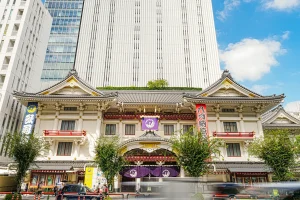
Watching kabuki in Tokyo does not require fluent Japanese or a whole day at the theatre. Kabuki combines acting, dance and music. At Kabukiza Theatre in Ginza, you can choose one act or a complete ticketed part, with English captions available for many performances.
The useful questions are what interests you, how long you want to stay and what you want to see from your seat. A focused visit can fit between other plans; a longer programme gives you time for several works and intervals. Begin with those choices, then leave yourself time to settle in.
Information checked on 10 October 2026. For current dates and sales announcements, use our Kabuki Schedule in Tokyo guide alongside the official listings.
Where to Watch Kabuki in Tokyo
Choose the theatre together with the production. A venue’s name alone will not tell you what is playing or which language services are available.
Start with Kabukiza in Ginza
Kabukiza specialises in kabuki, presents changing monthly programmes and offers regular tickets alongside single-act options. It is a practical starting point because you can compare performances, seating and visitor services through its official information.
A monthly programme does not mean performances every day. Dates, daily parts and starting times vary, so begin with your actual travel dates. Once you find a suitable performance, compare the formats below rather than assuming a familiar show time.
Choose Other Venues by the Production
Shinbashi Enbujo Theatre, also in the Higashi-Ginza area, stages kabuki alongside other theatrical forms. Its general visitor information states that English earphone guides are unavailable. Choose the work first, then consult its production page for any language support.
National Theatre productions continue at other venues following the original building’s closure at the end of October 2023. The National Theatre and the New National Theatre, Tokyo, are separate facilities, so follow the venue and address on your chosen listing. The October 2026 production at the latter’s Playhouse, for example, offers paid English audio guidance but no subtitles. Use the Japan Arts Council’s programme information to find the relevant production.
Choose Your Format and Seats for Time, View and Comfort
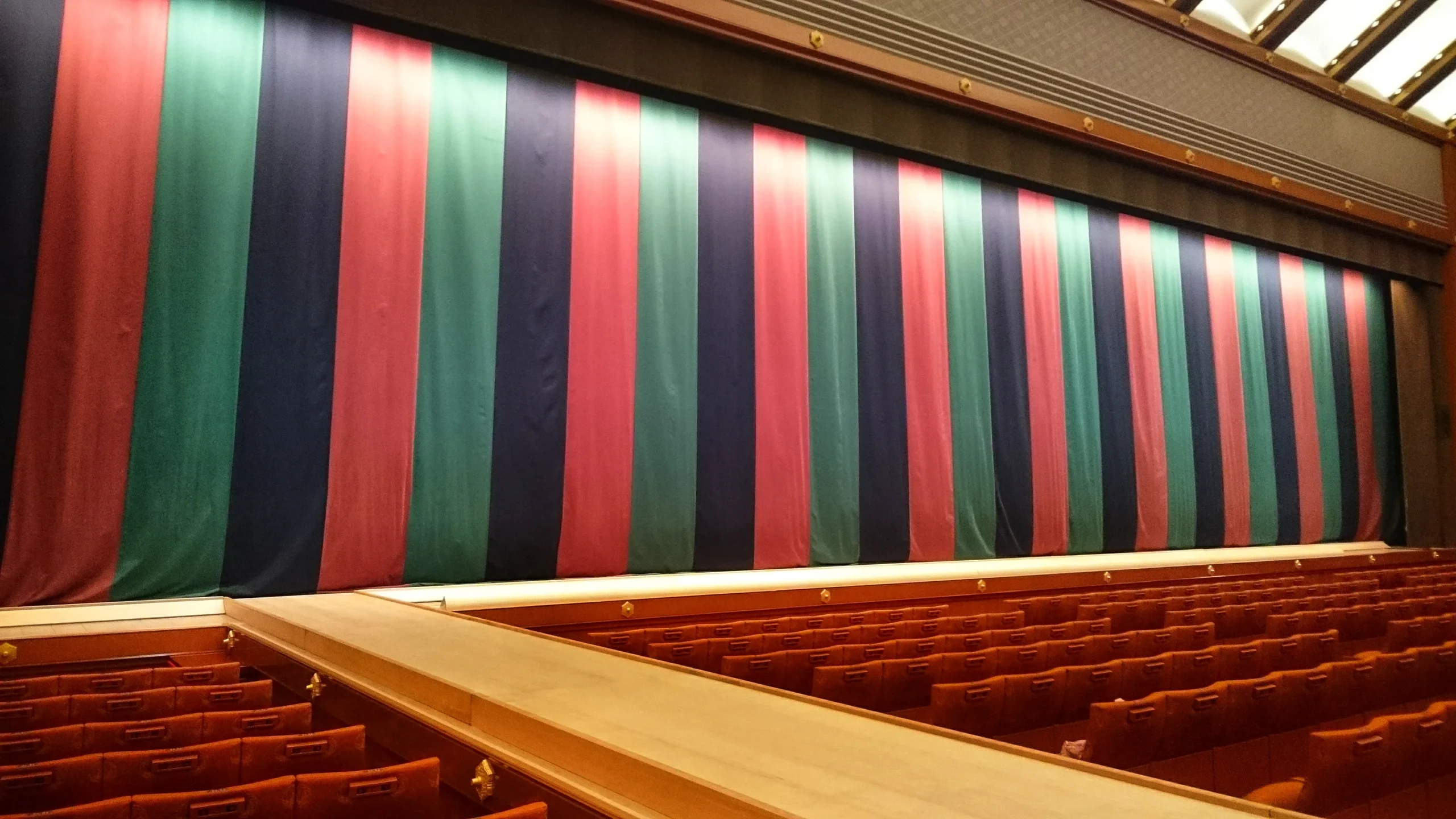
There is no single best format for a first visit. Compare the work and its duration with the view, seating space and facilities you want to use.
One Act for a Focused Visit
A single-act ticket covers one selected item, which may be a dance or an episode from a longer play. It does not necessarily contain a complete story. Reading the scene’s synopsis helps you recognise the situation when the action begins.
“One act” is not a fixed length. Kabukiza’s October 2026 selection ranges from 15 to 120 minutes, before arrival and caption rental. Look at the individual running time rather than reserving a standard hour.
Standard single-act seats are on Level 4, furthest from the stage. Parts of the main stage and the hanamichi, the raised passage through the audience, may be out of sight. Seating space is more limited than on Levels 1 and 2, and these tickets do not permit entry to Levels 1–3. The restrictions matter as much as the shorter commitment.
A Full Show Means One Ticketed Part
A regular ticket covers the named matinee, evening show or numbered part—not every performance that day. It may combine several plays and dances or centre on a longer work.
Duration and breaks depend on the programme. Check the estimated finish before arranging dinner or onward travel: in October 2026, the first two parts last about two and a half hours, while the third lasts about three. A full show need not occupy four hours.
| Format | What it offers | What to consider |
|---|---|---|
| Level 4 single act | One selected dance or dramatic episode | Potentially restricted view, limited seating space and no access to Levels 1–3 |
| Level 2 upgraded single act | One act, closer to the stage, with more spacious seating and access through the main lobby | Right-side seating, available dates and separate purchase instructions |
| Regular ticket for one part | Several works or a longer production, with scheduled intervals | Seat category, finish time, breaks and language support |
Match the Seat to What You Want to See
The hanamichi is an acting space, not merely a route to the stage. It can represent a road, a castle passage or other settings, bringing entrances and action into the auditorium. Its visibility matters if those moments interest you.
Use the seating plan and available view images to compare the passage, main stage and distance from both. For companions, select adjacent seats where your booking route allows. Upgraded Level 2 single acts offer a different balance of proximity and seating space, but are not available on every date; choose the actual seat, not simply the word “upgrade”.
Follow Kabuki Without Speaking Japanese
You need enough context to recognise the situation, rather than a translation of every word. A synopsis, captions and a few observation points can work together.
Choose Between Dance and Drama
Dance-led works offer an entry through movement, costume and music, although their stories and references still matter. Dramatic scenes may draw your attention towards relationships, loyalties and conflicts.
If sustained reading would distract you, movement and music may be your preferred starting point. If you enjoy following a conflict, choose a scene whose synopsis interests you. This is a choice of attention, not ability: neither form requires you to know every convention beforehand.
Use Captions and Synopses as Supporting Tools
Kabukiza’s devices provide essential translations of dialogue and lyrics, together with explanations, in English or Simplified Chinese. They support the performance rather than promising a complete word-for-word translation. Very short acts may not offer the service.
Published rental charges are 1,500 yen for a regular show and 1,000 yen for a single act. On-site rental is cash-only. The current multilingual regular-ticket site also offers caption-inclusive tickets for the October and November 2026 programmes, adding 1,500 yen when you select the relevant option. Look for that choice when booking.
A free English flyer and the English synopses at the end of the paid Japanese programme provide further context. Read the relationships beforehand, consult the device when needed and return your attention to the actors. At other venues, use the particular production’s service information rather than assuming Kabukiza’s arrangements apply.
Book Tickets and Understand the Total Cost
Keep the booking routes separate. Regular tickets, Level 4 single acts and upgraded Level 2 single acts have different conditions.
Follow the Official Route for Your Ticket
For a regular Kabukiza part, start with Shochiku’s multilingual booking site. Select the venue, date, starting time and seat category carefully. The current Kabukiza listings use QR admission, require no membership and charge no service fee. Supported cards must be enabled for 3D Secure 2 authentication. Purchases cannot be cancelled, so review the details before paying.
The site sells its own allocation, meaning an online “Sold Out” message does not always mean every seat has gone. Ticket Phone Shochiku has English-speaking staff at +81 3 6745 0888, from 10:00 to 17:00 Japan Standard Time. Same-day telephone reservations are unavailable.
For Level 4 single-act online tickets, sales open at noon JST on the day before the performance. One person may buy up to four tickets. A 110-yen fee applies per ticket, payment requires 3D Secure 2 and admission is by QR code. Purchases cannot be changed or cancelled for a change of plans.
Upgraded Level 2 single-act tickets also open at noon JST on the previous day. Same-day sales end at 17:00, and some dates are excluded. Follow this product’s separate instructions rather than applying the Level 4 rules.
Same-Day Single Acts: Reserved Seats, Limited Availability
Since 2 October 2026, Kabukiza’s same-day Level 4 counter tickets are reserved seats. Sales start at 10:00 for all that day’s parts and acts. Approximately 20 seats are allocated, although staging can change the number. Each person may buy one ticket and selects the seat when purchasing.
The counter accepts cash and credit cards, but not transport IC cards or QR-code payments. Companions should not expect one person to buy for the group. These tickets are a separate allocation, not simply whatever remains unsold online, and availability is not guaranteed.
Budget for the Seat, Captions and Fees
Use the following dated examples to understand the choices, then read the official prices for your travel dates.
| Item | October 2026 example |
|---|---|
| Regular seat for one part | 4,500–17,000 yen by category |
| Level 4 single act | 1,500–4,000 yen |
| Level 2 upgraded single act | 5,400–13,800 yen, depending on the act |
| Captions | 1,500 yen for a regular show; 1,000 yen for a single act |
| Online Level 4 booking fee | 110 yen per ticket |
These are not permanent price bands, and not every regular-seat category is sold through the multilingual site. A 2,500-yen Level 4 act with 1,000-yen captions and the online fee totals 3,610 yen; meals and transport are additional.
If an online single-act performance is cancelled and refunded, its terms cover the ticket’s face value, excluding fees and transport expenses. Keep your confirmation and follow the organiser’s notice. Refund conditions may differ by product.
Arrive at the Right Entrance and Settle In
Your ticket determines the arrival sequence. Prepare its confirmation or QR code before reaching the entrance, rather than searching for it at the door.
Follow the Route for Your Ticket Type
Higashi-Ginza Station serves the Hibiya and Toei Asakusa lines, with Exit 3 connected to Kabukiza. From Ginza Station, the official directions give a five-minute walk from Exit A6. The theatre’s address is 4-12-15 Ginza, Chuo-ku, Tokyo.
Allow about 30–45 minutes before the start as a planning margin, leaving time to use the toilets, arrange captions and find your seat. Admission times vary, and single-act starting times may change.
| Your ticket | Arrival sequence |
|---|---|
| Regular ticket from the current multilingual site | Prepare the QR on your phone or paper. Enter through the left side of the theatre doors at the main entrance; collect regular-show captions in the first-floor lobby. |
| Online Level 4 single act | Use the dedicated entrance left of the main entrance. Show the QR to staff on Level 4 and arrange captions there. |
| Same-day Level 4 single act | Buy at the dedicated ground-level window, then follow directions to the single-act entrance and assigned seat. |
| Another official channel or upgraded single act | Follow that product’s collection, entrance and caption instructions. |
Keep your phone charged or print the QR clearly. Late seating may be delayed by the staging. Even with tickets for consecutive Level 4 acts, you must leave your seat after each act and follow instructions for the next admission.
For wheelchair spaces or difficulty using stairs, contact Ticket Phone Shochiku before purchasing regular tickets. The Level 4 online page has a wheelchair-space option, and a companion also needs a ticket. A station connection does not establish a step-free route to every seat: confirm the complete route and any assistance required before buying.
Plan Food, Breaks and Audience Manners
Arrange food before or after a single act. For a regular part, use the published intervals and permitted eating areas; do not assume every programme has the same breaks. Choose a meal plan that fits the ticket you hold.
There is no formal dress code. Wear comfortable clothing, remove headwear that obstructs others and avoid leaning forward. During the performance, do not photograph, record, talk, eat or drink; switch off personal electronic devices and use the official caption device as instructed.
If a child becomes unsettled and disturbs others, take a break in the lobby. Consult the age and ticket conditions for the chosen product before booking. Leave large luggage at your accommodation where possible.
Notice the Performance Beyond the Dialogue
Once the main situation is clear, choose two or three things to observe. Movement, sound and stage changes help you follow without reading continuously.
Follow Movement, Stillness and Sound
Watch the pace of an entrance along the hanamichi, a change of direction or a sudden pause. A mie is a held pose that concentrates an important dramatic moment. The contrast between movement and stillness directs attention towards the actor.
Onnagata are male actors specialising in female roles, using trained conventions of gesture, movement and voice. Music gives you another point of attention: the three-stringed shamisen, singing and percussion accompany action and help establish the scene.
You may hear kakegoe, calls from experienced spectators, often using an actor’s stage-family name. These have particular timing; listening is enough, and you do not need to join in.
Watch How the Stage Changes
A revolving stage can bring another setting into view, while seri are lifts that raise or lower actors and scenery. Black-clad assistants may remain visible, helping the action without being treated as characters. The work of theatre becomes part of what you see.
Not every production uses bold makeup or dramatic machinery. Some concentrate on subtle acting or dance. Follow the techniques in your chosen work and the details visible from your seat. For broader comparisons, our Noh and Kabuki guide explores other approaches to Japanese stage performance.
Build a Flexible Theatre Day in Ginza
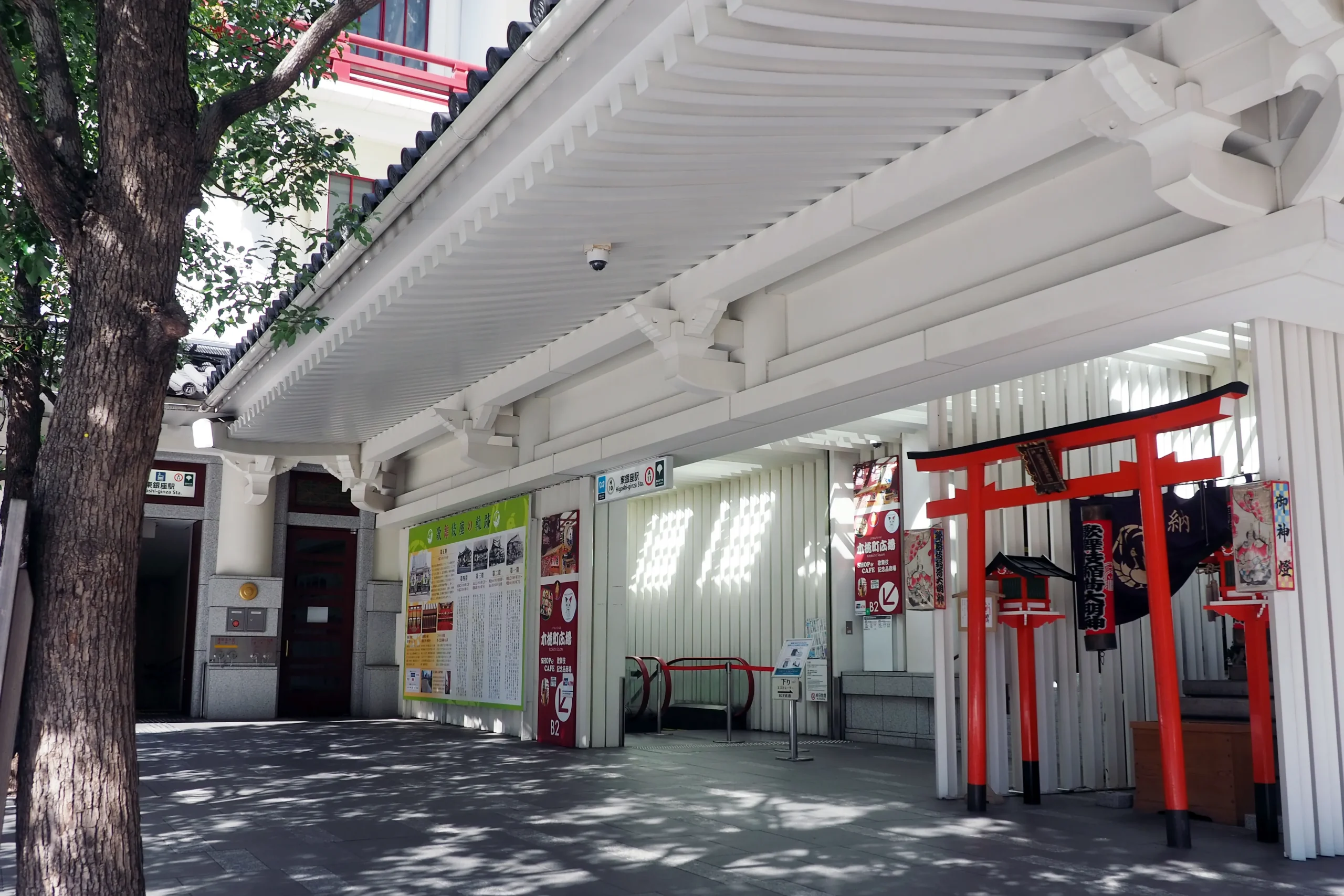
Give the performance a clear place in the day, then keep surrounding plans easy to adjust. Separate decisions made before purchase from changes after booking.
| Your situation | Plan A | Plan B | Plan C |
|---|---|---|---|
| Planning a short visit | Reserve a suitable act and allow arrival time | Before buying, compare another act or date | Visit the square and gallery; arrange live theatre another day |
| Already holding tickets | Prepare captions and meal timing | In ordinary rain, omit the outdoor walk | For disruption, consult transport and theatre notices before travelling |
| Visiting without a ticket | Try the same-day counter without assuming success | Explore the basement square and open exhibitions | If travel becomes difficult, avoid unnecessary additional journeys |
Kobikichō Square, on Basement Level 2, has shops accessible without a performance ticket. Its October 2026 hours are 9:30–18:30 on performance days and 9:30–18:00 otherwise. Use the current monthly notice before relying on those hours.
For an indoor cultural stop, Kabukiza Gallery on the fifth floor introduces the theatre’s history and kabuki’s forms, with multilingual QR information. Admission is free, and published hours are 10:30–18:00, with irregular closures. Read the opening notices before visiting; keep the rooftop garden for suitable weather.
Ordinary rain need not spoil an indoor performance. Serious transport disruption is different: consult your rail operator’s service updates and the theatre’s notices separately. Do not assume your ticket is refundable simply because you cannot reach the venue.
Kabuki Tour in Tokyo: A Day at Kabukiza, Planned for You
The theatre day above can also be spent with a guide. On 24 November, our one-day kabuki tour builds it around Kabukiza’s Kaomise matinee, Kanadehon Chūshingura, with a full-programme seat rather than a fourth-level single act.
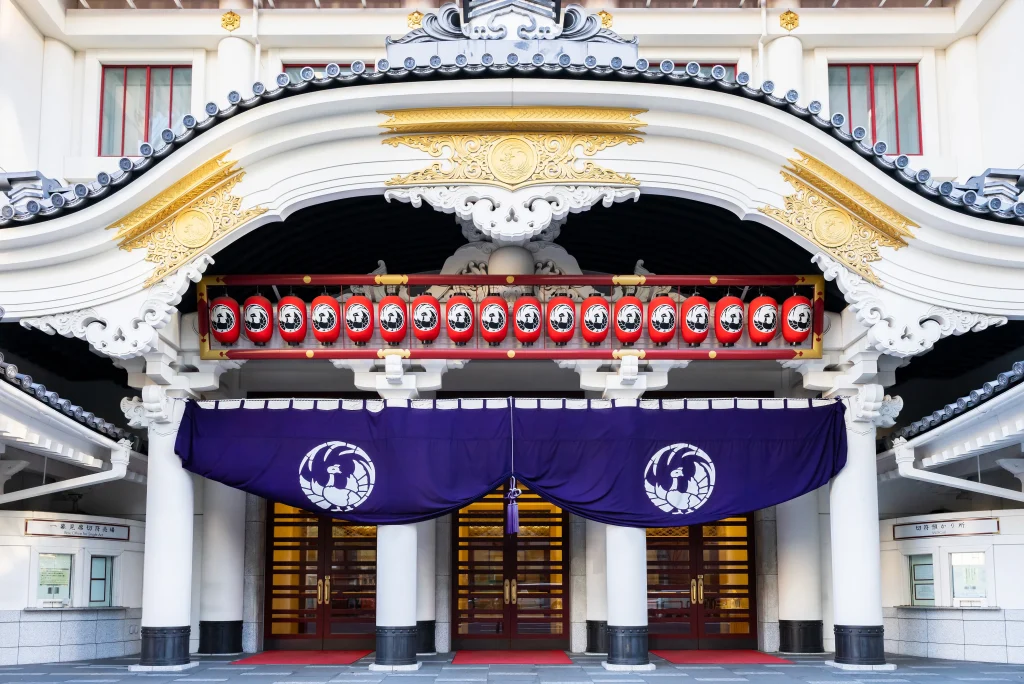
- 10:25 Meet your guide in front of Kabukiza and take photos of the façade
- 10:50 Watch a puppet announce the day’s cast, a custom you will only see at Chūshingura
- 11:00 The matinee begins, with an English captioning device
- 12:30 Bento lunch at your seat during the interval
- After the show Rooftop garden, Goemon Staircase and Kabukiza Gallery, then shopping in Kobikichō Square
▶︎See the full day and save your seat for 24 November
Let the Stage Set the Pace—Then Take Your Time
The right visit matches your interest, attention and available time. Choose the work, then the format, seat and language support. Follow the relevant booking instructions and leave some space around the performance.
If you would like help fitting theatre into a wider journey, ENJYU JAPAN’s Tailor-Made Tour service offers a way to discuss your interests and preferred pace.
When the curtain falls, leave one small freedom in your plans: an hour that belongs entirely to you.
References
- Shochiku / KABUKI WEB – Kabukiza Theatre Information: Access, Box Office and Visitor Services
- Shochiku / E-TIX – Multilingual Online Tickets: Regular Performances, English Caption Options and QR Admission
- Shochiku / E-TIX – Kabukiza Single-Act Tickets: Online Booking, Seating Restrictions and Admission Conditions
- Shochiku / KABUKI WEB – Upgraded Single-Act Tickets: Level 2 Seating and Booking Arrangements
- Shochiku / Kabuki-bito – Same-Day Single-Act Tickets: Reserved Seating and Credit Card Payments from October 2026
- Shochiku / KABUKI WEB – Service for International Visitors: English Captions, Rental Fees and Synopses
- Shochiku / KABUKI WEB – Unique Stage Structures and Dynamic Stage Sets: Hanamichi, Revolving Stages and Stage Lifts
- Kabukiza – Kobikichō Square: Current Opening Hours and Shops
- Shochiku – Kabukiza Gallery: Free Admission, Opening Hours and Multilingual Exhibition Information