If booking kabuki feels more puzzling than the performance itself, a few clear distinctions will help you find the ticket that suits you.
You can buy kabuki tickets through official English-language online services, an English-speaking telephone line, or theatre box offices. Start with your travel date and the published programme. Then choose a complete performance session or, where offered, a single act. Before paying, check the seat, English support, total cost and entry method.
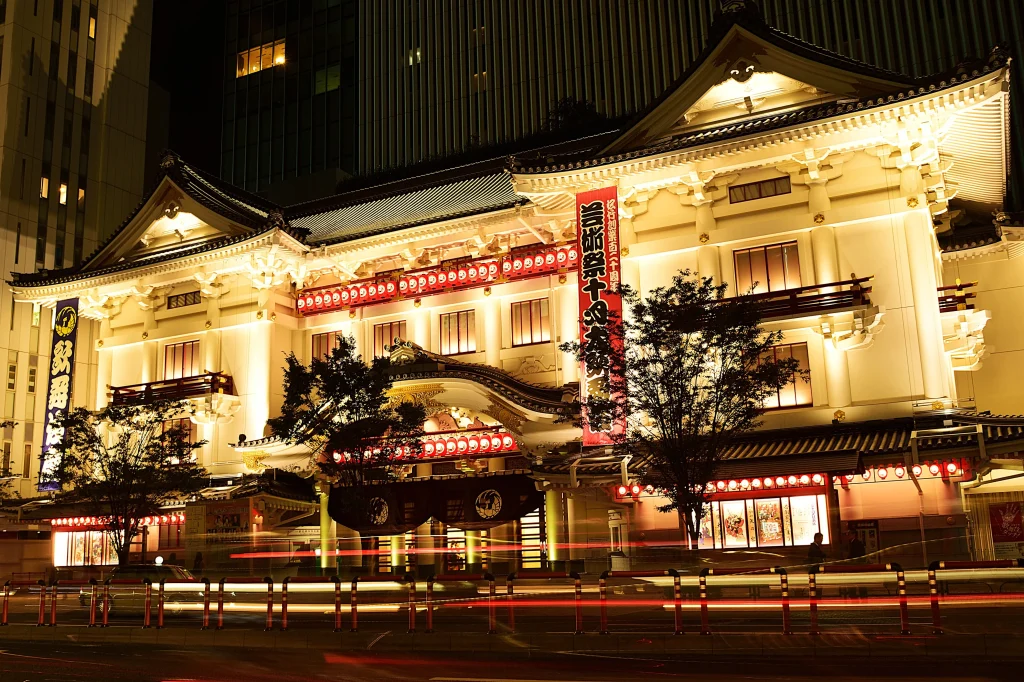
This guide uses Tokyo’s Kabukiza Theatre as its main example. For performances elsewhere in Japan, follow the organiser’s own booking instructions. The aim is a clear purchase and a visit that fits comfortably into your journey.
Information checked on 10 October 2026. Prices below illustrate Kabukiza’s October 2026 programme.
Where to Buy Kabuki Tickets Through Official Channels
Begin with the performance you want to attend. Its official page should lead you to the appropriate seller, rather than leaving you to identify the right booking system yourself.
Start with Your Travel Dates and the Official Programme
Check the theatre, performance dates, days without performances and starting times. A programme may contain several separately ticketed sessions each day, so match both the date and session to your itinerary.
Record your intended visit and the official ticket release date separately. “On sale” means when booking opens; it is not the date of your performance. Release times use Japan Standard Time, or JST, which is UTC+9.
For example, Kabukiza’s November 2026 programme opens on 1 November, while general sales begin on 14 October at 10:00 JST. This illustrates one production’s schedule, not a permanent monthly rule.
A missing purchase option before release is different from a sold-out performance. If you are planning months ahead, record the release date and identify a second suitable session. For broader help finding performances, see our Kabuki Schedule in Tokyo guide.
Use the Right Booking Site for Your Ticket
For complete sessions, follow the Shochiku Multilingual Online Ticket link supplied by the official programme page. This is a separate route from the Japanese-language Ticket Web Shochiku service.
Kabukiza’s fourth-level and upgraded second-level single-act tickets have dedicated online sales pages. Follow the link for your intended floor, rather than assuming all tickets share one checkout.
For another theatre or a touring production, start with that performance’s official information. Kabukiza’s single-act arrangements should not be applied to every kabuki venue.
Choose a Full Show or a Single Act
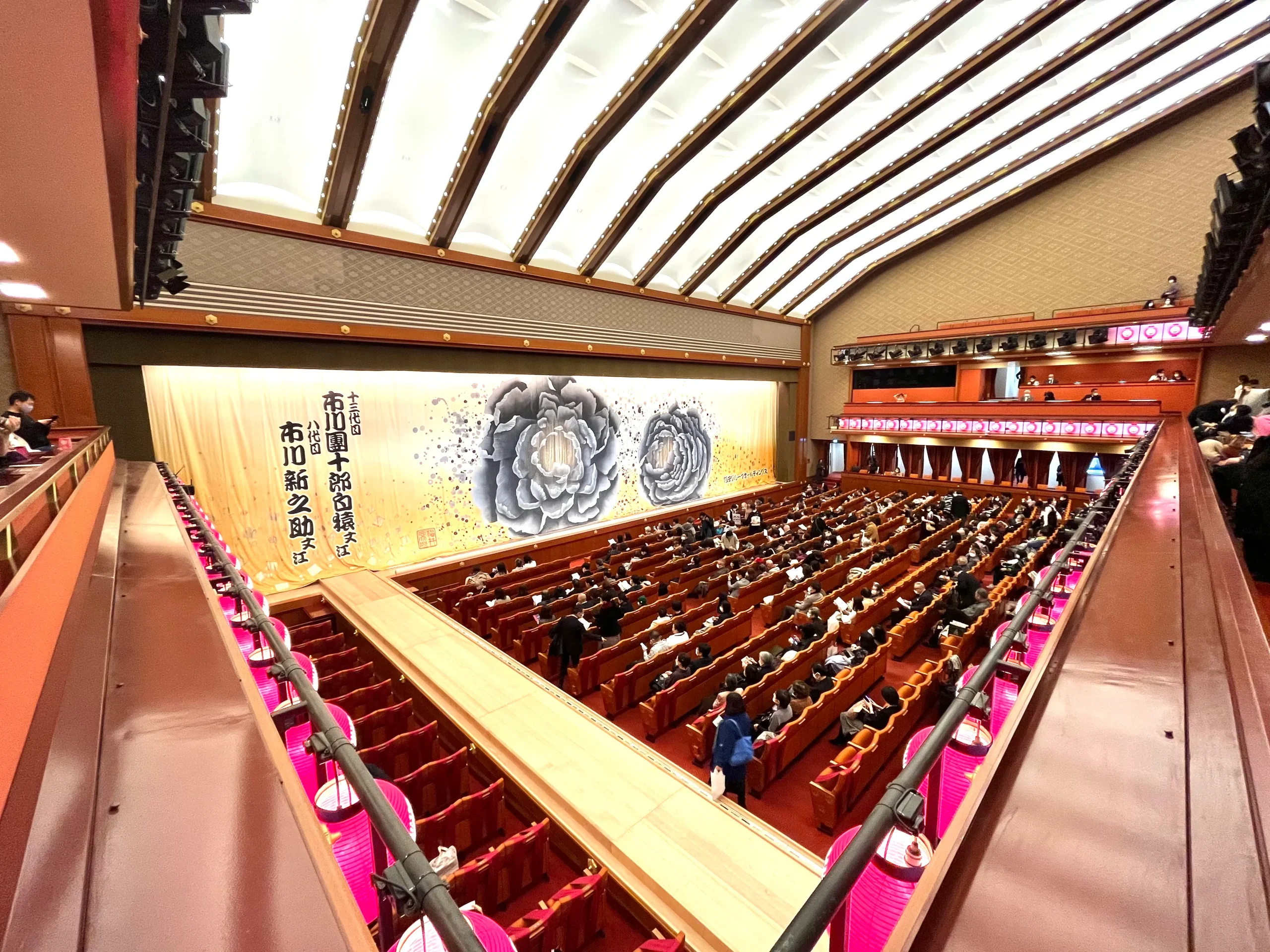
Your available time matters, but so do the programme and the view you want. A complete performance and one selected act are different choices, not different levels of cultural commitment.
A Full Performance Covers One Listed Session
A regular ticket covers the programme within the session printed on it: for example, the matinee, evening show or Part 1. A separate session requires another ticket. “Full show” does not mean admission to every performance that day.
Several plays or dances may appear within one session, with intervals between them. Check the published finishing time before arranging dinner or onward travel. The duration depends on the programme; it is not always four hours.
Choose this option if you want more time in the theatre and the contrasts between its pieces. It offers a fuller programme without necessarily requiring the entire day.
Fourth-Level Single Acts: Time, Price and View
A single-act ticket admits you to one designated act or scene. It can be a carefully chosen introduction or a way to see a particular piece.
Read the running time rather than assuming every act is brief. Kabukiza’s October 2026 examples range from a 15-minute dance to a two-hour dramatic section.
Fourth-level seats are furthest from the stage. The theatre’s guidance says the hanamichi, an acting runway through the audience, is not visible from these seats. Part of the main stage may also be out of sight, and seat space is more limited than on the first and second levels.
These seats can keep the price lower, provided those viewing conditions suit you. A focused visit works best when you choose the piece and seat with those limits in mind.
Upgraded Single Acts on the Second Level
An upgraded single-act ticket provides a second-level seat for a designated piece. It offers another option for travellers who want to limit their time while sitting closer to the stage.
Availability varies by date and act. Compare its price with a complete session before deciding: a single act is not necessarily the cheapest choice.
| Ticket | What you watch | Main consideration |
| Complete session | All pieces in one listed session | Finishing time, intervals and seating category |
| Fourth-level single act | One designated act or scene | Lower price, distant view and tighter seat space |
| Second-level upgraded single act | One designated act or scene | Closer seating, higher price and date-specific availability |
How to Book Kabuki Tickets in English
Once you have chosen your session or act, prepare your payment method and read the purchase conditions. Check the details before entering payment information, not after.
Book a Full Performance
Use this sequence when purchasing through the multilingual service:
- Select the theatre, date and session.
- Check the seating category and ticket quantity.
- Confirm seating arrangements for your companions.
- Choose an English-captioning ticket if offered and wanted.
- Review the total, delivery method and cancellation terms.
- Pay, then retain the confirmation and ticket link.
Compare the selected session with your itinerary one last time. A different Part or similarly numbered date can mean a different programme.
Some productions offer tickets that include captioning. Kabukiza’s October 2026 multilingual sales page lists an additional 1,500 yen for this option. Use the choices offered for your actual performance.
Reserve a Single Act Online
Use the dedicated fourth-level booking page or upgraded second-level booking page. Current online sales open at 12:00 noon JST on the day before the performance.
Online, one person may purchase up to four fourth-level tickets or six second-level tickets. Second-level online sales remain open on the performance day until 17:00, subject to availability.
These services require a card registered for, and compatible with, 3D Secure 2. This is your bank’s online payment authentication system. Make sure you can receive its verification request while travelling.
The single-act pages require checkout within 15 minutes of the selection-review stage and advise against multiple browser windows or the back button. Prepare your choices first to avoid rushing.
Buy a Fourth-Level Ticket on the Day
Since 2 October 2026, fourth-level tickets sold at the single-act box office have been reserved seats. You choose from the available seats when purchasing.
Approximately 20 seats are allocated to this route, although the number can change. Sales open at 10:00 JST for all that day’s acts, with a limit of one ticket per person. Sales end once the allocation is exhausted.
Cash and credit cards are accepted; transport IC cards and QR payment services are not. Use the dedicated single-act counter, not the regular-ticket box office.
For companions hoping to sit together, advance online booking may be more practical. Adjacent seats still depend on availability, so check before paying.
Compare Seats and the Total Cost
A useful comparison considers what you can see and everything you will pay. Admission price alone does not tell you whether a ticket suits your plans.
Choose for the View You Value
When a production uses the hanamichi, entrances and scenes can take place away from the main stage. Its visibility is therefore part of the seat choice, not simply a cultural detail.
Use the official seating chart to consider your distance from the stage and your view of this passage. Side positions and upper levels offer different perspectives. Do not assume that every seat within a higher-priced category has an unrestricted view.
If facial expressions and costume detail matter most, consider a closer position. If cost matters more, weigh the savings against the stated viewing conditions. Fourth-level single-act seats do not provide a view of the hanamichi.
Add Captions and Any Booking Fees
October 2026 admission prices at Kabukiza illustrate the differences:
| Ticket type | Published admission price |
| Complete session | 4,500–17,000 yen |
| Fourth-level single act | 1,500–4,000 yen |
| Second-level upgraded single act | 5,400–13,800 yen |
These figures describe that production, not year-round or nationwide rates.
The 17,000-yen Special Seat and Box Seat are not available through the multilingual online service. Its October Upper Tier B ticket costs 4,500 yen; with English captioning added, the total is 6,000 yen, with no service fee on this booking route.
The fourth-level online page separately lists a 110-yen system usage fee per ticket. Read its final order breakdown rather than transferring one service’s fee conditions to another.
If you want several acts, compare their combined price with a complete session covering those pieces. Keep the date, seating and caption arrangements consistent.
Check English Support and Seating Needs Before Paying
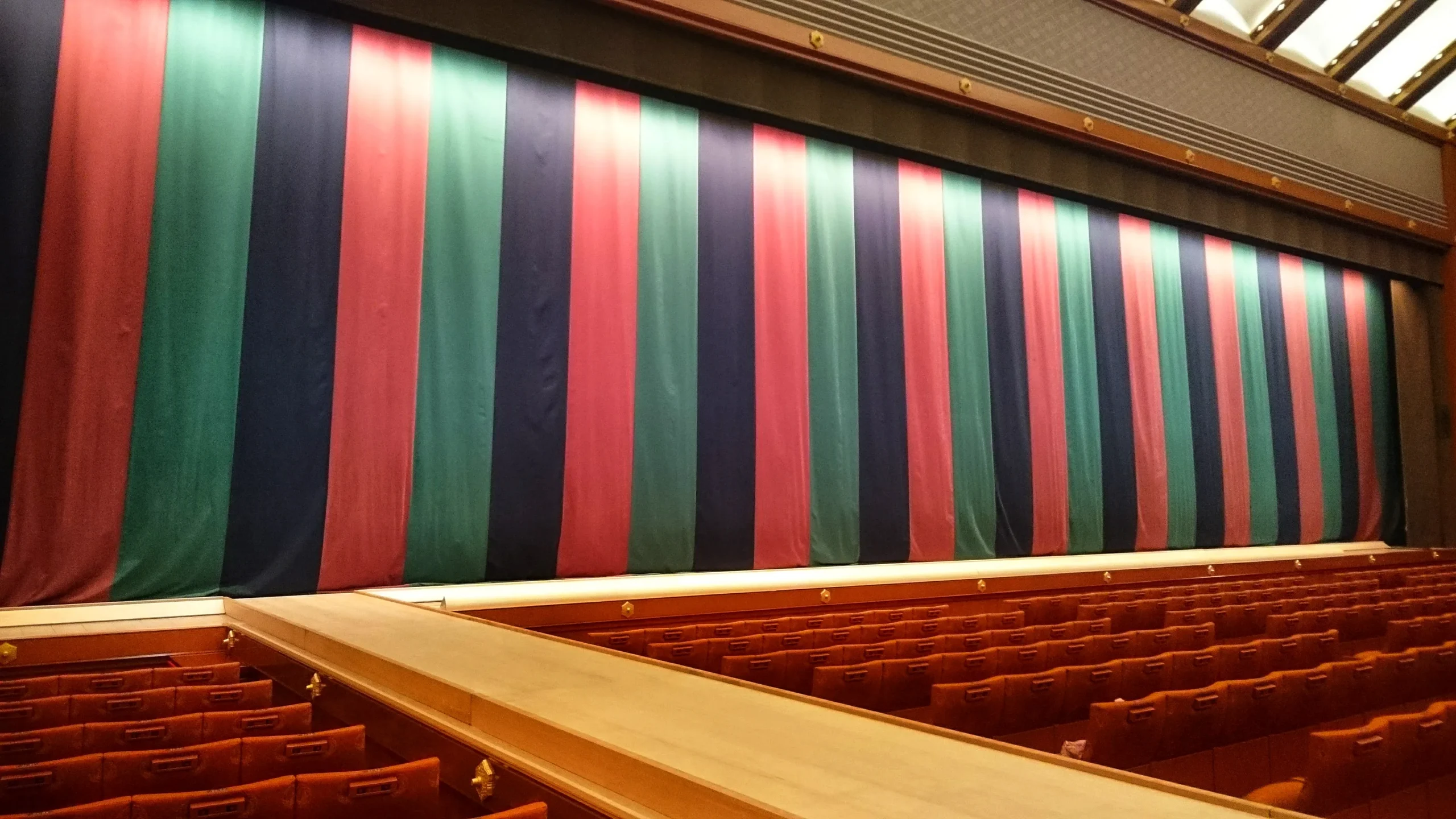
Booking in English and following a performance in English are separate matters. Decide which support you need before choosing the ticket.
Captions, Audio Guides and Synopses Are Different
First, check whether your booking includes English captioning. If it does not, follow the production’s instructions for renting a device at the theatre.
Kabukiza’s published rental charges are 1,500 yen for a complete session and 1,000 yen for a single act, payable in cash. The device supplies essential translations of dialogue and lyrics, together with explanations about kabuki. English and Simplified Chinese are available.
Very short pieces may have no caption service. Audio guides and written synopses serve different purposes, so check the production’s own information rather than treating them as interchangeable.
Reading a synopsis beforehand helps establish the characters and situation. For broader cultural context, see our guide to Noh and Kabuki.
Plan for Companions, Children and Mobility Needs
Confirm adjacent seating before payment. Read children’s conditions for the production: Kabukiza’s current single-act notice requires a separate ticket for children aged four and over.
The fourth-level online page has a wheelchair-space booking option. The second-level upgraded area has no dedicated wheelchair space: visitors must be able to transfer to a theatre seat, and there are steps on the route.
If stairs, transfers or seating access affect your visit, resolve those conditions before buying. For regular tickets, the multilingual service directs customers requiring seating assistance to the telephone reservation service.
What to Do If Booking Does Not Go to Plan
Identify whether the problem concerns inventory, timing or payment. Each calls for a different next step.
Sold Out, Closed Sales and Card Problems
The multilingual service sells an allocated portion of tickets. Its “Sold Out” display can therefore reflect its own inventory, rather than every seat held by the promoter.
The service also becomes unavailable one day before Kabukiza performances and two days before performances at other covered theatres. It then displays “Sold Out” for dates it no longer handles, even when the promoter may still have tickets.
For regular-ticket availability, call +81-3-6745-0888 between 10:00 and 17:00 JST, or ask at the theatre box office. English-speaking staff are available. Same-day tickets cannot be reserved by telephone.
A production-specific announcement that a session’s reserved seats are sold out is different. Read both the booking display and the programme’s notices before deciding what to try next.
If payment fails, check your card’s authentication requirements. If the outcome is unclear, check the confirmation page, email folders and seller support before purchasing again. A missing email alone does not establish that no order exists.
Rain, Transport Disruption and Cancellation
An indoor performance can give a rainy day a useful fixed point. Severe weather, however, can affect both the journey and the organiser’s plans.
| Situation | First step | Second option | Third option |
| Preferred session unavailable | Ask the official seller about remaining tickets | Compare another session, seat or single act | Choose another date or a verified alternative production |
| Ordinary rain; transport operating | Keep the booked performance | Shorten outdoor plans around it | Allow an indoor break before or afterwards |
| Severe weather or disrupted transport | Check organiser and transport announcements | Consider a new booking on another day if practical | Avoid adding long-distance travel |
| Payment outcome unclear | Establish whether an order exists | Contact seller support | Try another route only after clarifying the first purchase |
A new booking is not the same as changing an existing ticket. Published purchase conditions prohibit customer cancellation; single-act conditions also prohibit changes and refunds for personal reasons.
If the organiser cancels, follow its instructions for your purchase route. Single-act terms limit any cancellation refund to the ticket price, excluding commissions, transport and other expenses. Keep the confirmation email and do not assume wider travel costs will be covered.
Kabuki Tour in Tokyo: Your Ticket Already in Hand
If the steps above feel like a lot for one afternoon, our one-day kabuki tour on 24 November takes them off your list. It is built around Kabukiza’s Kaomise matinee, Kanadehon Chūshingura, and the things this guide asks you to arrange are ready before you arrive:
- A full-programme matinee seat
- An English captioning device, with no cash rental at the counter
- A bento lunch at your seat during the interval
Your guide meets you in front of the theatre at 10:25 and takes you in. After the show, the tour continues to the rooftop garden, the Goemon Staircase, the Kabukiza Gallery and Kobikichō Square.
See what’s included and save your seat for 24 November
Get Your Ticket Ready and Find the Right Entrance
Ticket delivery and entry depend on what you bought and where you bought it. Read those instructions before setting out.
QR Tickets and Ticket Collection
The multilingual service issues QR tickets for Kabukiza. Display the code on your phone or print it; one code is required per visitor. If companions arrive separately, share the confirmation and agree who will use each code.
For the same service, Shinbashi Enbujo Theatre and Kyoto’s Minamiza Theatre use collection at the venue. Present the order-confirmation email, printed or displayed on your phone, as instructed.
Your own booking confirmation is the final guide to collection arrangements. Charge your phone and keep the ticket link easy to find.
Use the Entrance for Your Ticket
Kabukiza is at 4-12-15 Ginza, Chuo-ku, Tokyo. The official theatre access information identifies Higashi-ginza Station, Exit 3, on the Hibiya and Asakusa lines.
| Kabukiza ticket or task | Where to go |
| Complete session bought through multilingual online sales | Main entrance; present your QR as instructed |
| Regular-ticket purchase or enquiry | Box office in Kobikichō Square, basement level two |
| Second-level upgraded single act | Main entrance |
| Fourth-level single act | Dedicated entrance to the left when facing the theatre |
The entry routes differ even within the same building. Online fourth-level ticket holders should follow the dedicated entrance instructions, rather than joining the ordinary-ticket counter.
Planned admission begins approximately 30 minutes before complete sessions and 20 minutes before second-level single acts. Add time for captions, collection or finding the entrance; these are entry estimates, not arrival deadlines.
Fourth-level audiences cannot enter levels one to three, and their level has no restaurants or souvenir shops. Each act uses a complete audience changeover, including when you hold consecutive tickets. Follow the re-entry instructions.
Before leaving, check:
- The date, session or act, and latest starting time.
- Your QR ticket or collection confirmation.
- The correct entrance and, if collecting tickets, the collection location and opening hours.
- Cash for on-site caption rental.
- Each companion’s ticket and meeting arrangement.
- Your onward journey.
Keep electronic devices silent and follow the theatre’s restrictions on photography, recording and conversation during the performance.
Kabuki Ticket Questions Answered
These brief answers bring together the distinctions most likely to affect your booking.
How Far in Advance Can I Buy Kabuki Tickets?
Regular tickets have a published release date for each production. Kabukiza’s current online single-act tickets open at noon JST on the day before the performance. Use the relevant announcement rather than assuming one monthly release rule.
Can I Buy Tickets on the Day?
Yes, subject to remaining tickets and the relevant sales window. Regular tickets are available at theatre box offices, while Kabukiza’s fourth-level single-act counter starts at 10:00. Second-level single-act online sales currently end at 17:00.
Does Sold Out Mean the Theatre Is Full?
Not always. A multilingual sales-page message may reflect that service’s allocation or deadline. Ask the official seller about regular-ticket availability, but distinguish this from an explicit announcement that a particular session’s reserved seats are sold out.
Are Single-Act Seats Always on the Fourth Level?
No. Kabukiza also offers upgraded second-level tickets for selected dates and pieces. They have different prices, entry arrangements and mobility conditions, so compare them as a separate choice rather than an upgrade available at every theatre.
Choose the Ticket That Fits Your Journey
Choose your date first, then match the session, seat, English support and total cost to the time you want to give kabuki. One selected act and a complete programme offer different ways to enjoy the theatre; neither needs to crowd the rest of your day.
Your next step is the official programme for your visit. If coordinating theatre with a wider itinerary needs more thought, ENJYU JAPAN offers tailor-made travel planning.
Leave a little room for whatever catches your eye; the finest souvenir may be a fascination you had not intended to bring home.
References
- Shochiku / KABUKI WEB – How to Buy Tickets: Official Online Sales, English Telephone Reservations and Theatre Box Offices
- Shochiku – Multilingual Online Ticket: Performance Tickets, Prices and Captioning Options
- Shochiku / Kabuki-bito – Kabukiza Same-Day Single-Act Tickets: Reserved Seating, Payment Methods and Purchase Limits from October 2026
- Shochiku / etix – Kabukiza Fourth-Level Single-Act Tickets: Booking Times, Fees, QR Entry and Purchase Conditions
- Shochiku / etix – Kabukiza Upgraded Second-Level Single-Act Tickets: Sales Deadlines, Entry and Mobility Conditions
- Shochiku / KABUKI WEB – Single Act Tickets at Kabukiza, October 2026: Running Times and Prices
- Shochiku / KABUKI WEB – Service for International Visitors: English Captions, Rental Charges and Synopses
- Shochiku – Multilingual Online Ticket: QR Tickets and Theatre Ticket Collection
- Shochiku – Multilingual Online Ticket: Cancellation Conditions and Seating Assistance
- Shochiku / KABUKI WEB – Kabukiza Theatre: Directions, Floor Maps and Seating Charts