Japan’s autumn colors do not arrive everywhere at once. Mountain valleys and parts of northeastern Japan often turn earlier, while Kyoto’s maples can be at their best well into November. Your travel dates, and where you’ll be staying, can make a bigger difference than the train you choose.
Some of these journeys fit comfortably into an afternoon. Others deserve a day or more. And while the Shinkansen is excellent for getting somewhere quickly, there is something to be said for taking a train simply because you want to enjoy the journey.
Which Autumn Train Ride Fits Your Trip?
| Railway | Usual foliage window* | Scenic ride | Booking | Japan Rail Pass |
|---|---|---|---|---|
| Eizan, Kyoto | November | About 30 min to Kurama | No reservation for regular trains | No |
| Sagano, Kyoto | Mid-Nov to early Dec | About 25 min | Reserve ahead | No |
| Hakone Tozan | Mid to late Nov | About 40 min | No reservation for regular trains | No; Hakone Freepass applies |
| Watarase Keikoku | Late Oct to Nov | Depends on service | Separate ticket for trolley trains | No |
| Kurobe Gorge, Toyama | Oct to early/mid-Nov | About 80 min one way | Reserve ahead | No |
| Tadami Line, Tohoku | Mid-Oct to early Nov | Long regional journey | No seat reservation for regular trains | Yes |
*These are general seasonal ranges, not guaranteed peak dates. Ride times exclude transfers and return travel. For more ideas throughout the year, see ENJYU JAPAN’s guide to scenic trains in Japan.
When Is the Best Time for an Autumn Train in Japan?
Autumn colors generally appear earlier in the mountains than in lower, warmer areas. The Tadami Line’s regional tourism guide gives mid-October to early November as the usual foliage period around Oku-Aizu. Kyoto’s Sagano Railway, meanwhile, puts its typical season between mid-November and early December.
If you’re traveling in October, Kurobe Gorge or the Tadami Line may suit your dates, provided you have time to reach them. For visitors staying in Kyoto in the second half of November, Eizan and Sagano are often easier choices. Hakone and Watarase offer possibilities for a journey from the Tokyo area.
The timing changes from year to year, sometimes noticeably. A foliage forecast checked shortly before departure will tell you more than last year’s peak date.
Read more: Japan in November.
Six Scenic Train Journeys for Autumn in Japan
Eizan Railway, Kyoto: A Tunnel of Maple Leaves
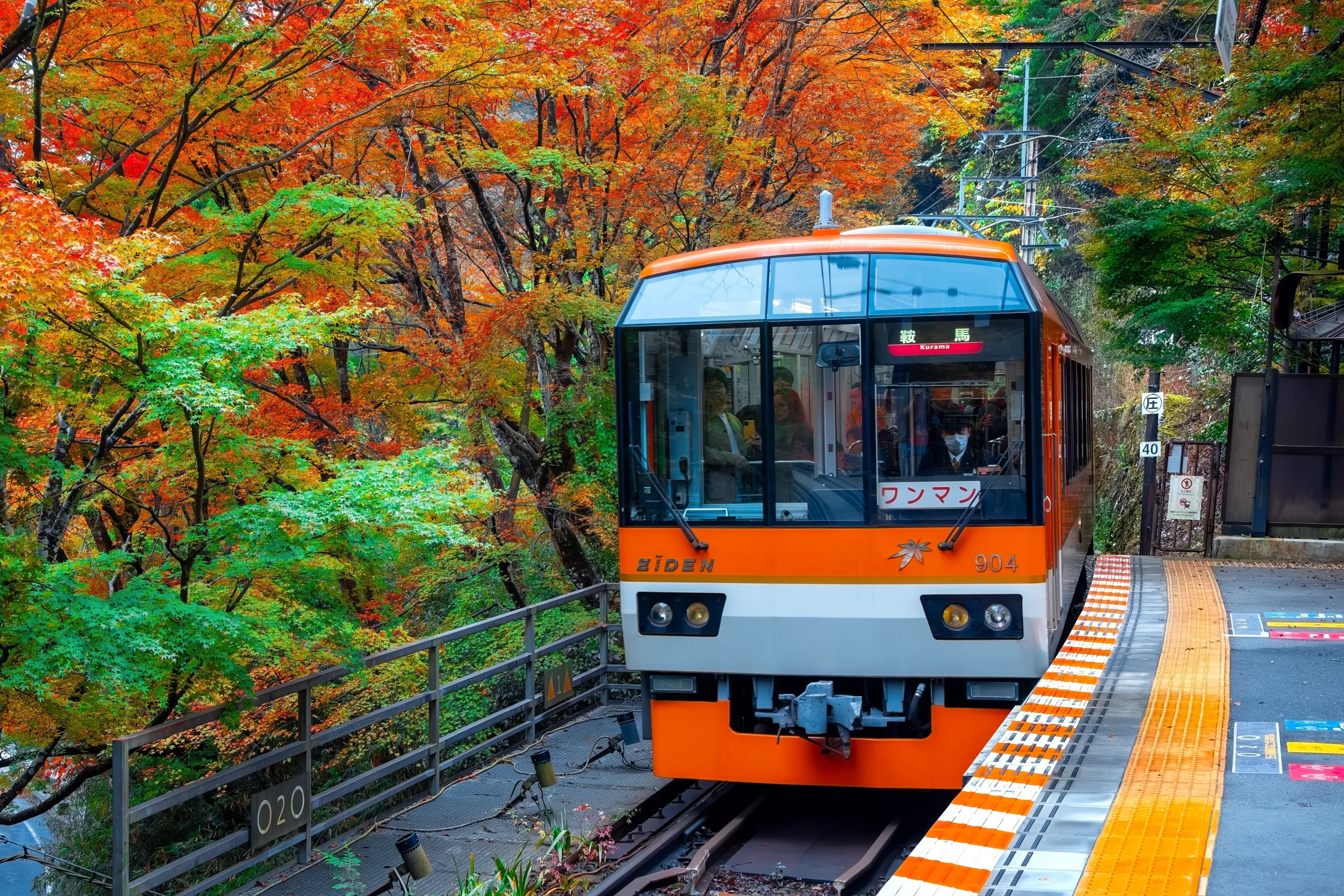
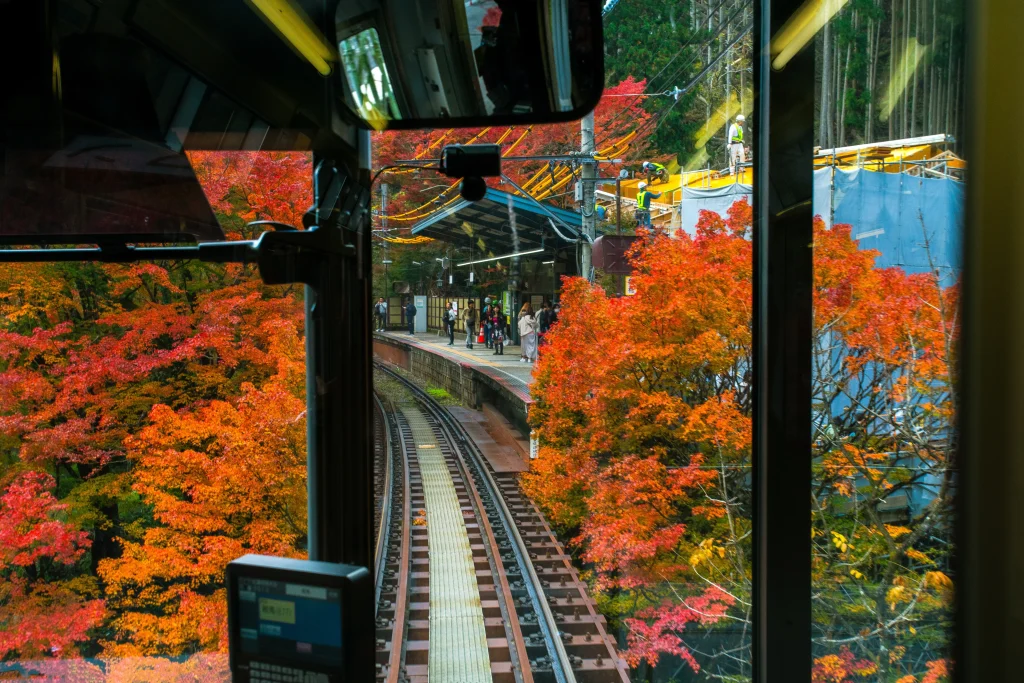
Eizan Railway’s Kurama Line heads north from Demachiyanagi into the hills outside central Kyoto. Between Ichihara and Ninose, the tracks pass through a 250-meter stretch lined with roughly 280 maple trees. Known as the Maple Leaf Tunnel (Momiji no Tunnel), this is a view to enjoy from aboard the train.
In autumn, the leaves appear close to the windows, surrounding the carriages with red, orange and yellow. The panoramic KIRARA and MAI trains offer particularly good views, and both run as regular services without reservations or additional fares. Check their timetables if you want to ride a particular train.
The railway also illuminates the tunnel after dark. In 2026, the light-up runs from November 7 to December 6, from sunset until around 9 PM. Trains slow down through the illuminated section and switch off their interior lights so passengers can appreciate the view. The leaves are usually at their best in mid-to-late November, though the colors vary each year.
Eizan Railway’s illuminated Maple Leaf Tunnel, filmed November 15, 2019. Eizan Electric Railway (official YouTube channel).
The journey also fits well with a visit to Kurama or Kibune. Nearby Kifune Shrine holds its own autumn illumination from November 7 to 24, 2026, until around 8:30 PM, so the two can be combined in one evening. Eizan is better treated as a separate half-day outing rather than combined with Arashiyama, which lies on the other side of Kyoto.
Reference: Eizan Railway Official Website
Sagano Romantic Train, Kyoto: Along the Hozugawa Gorge
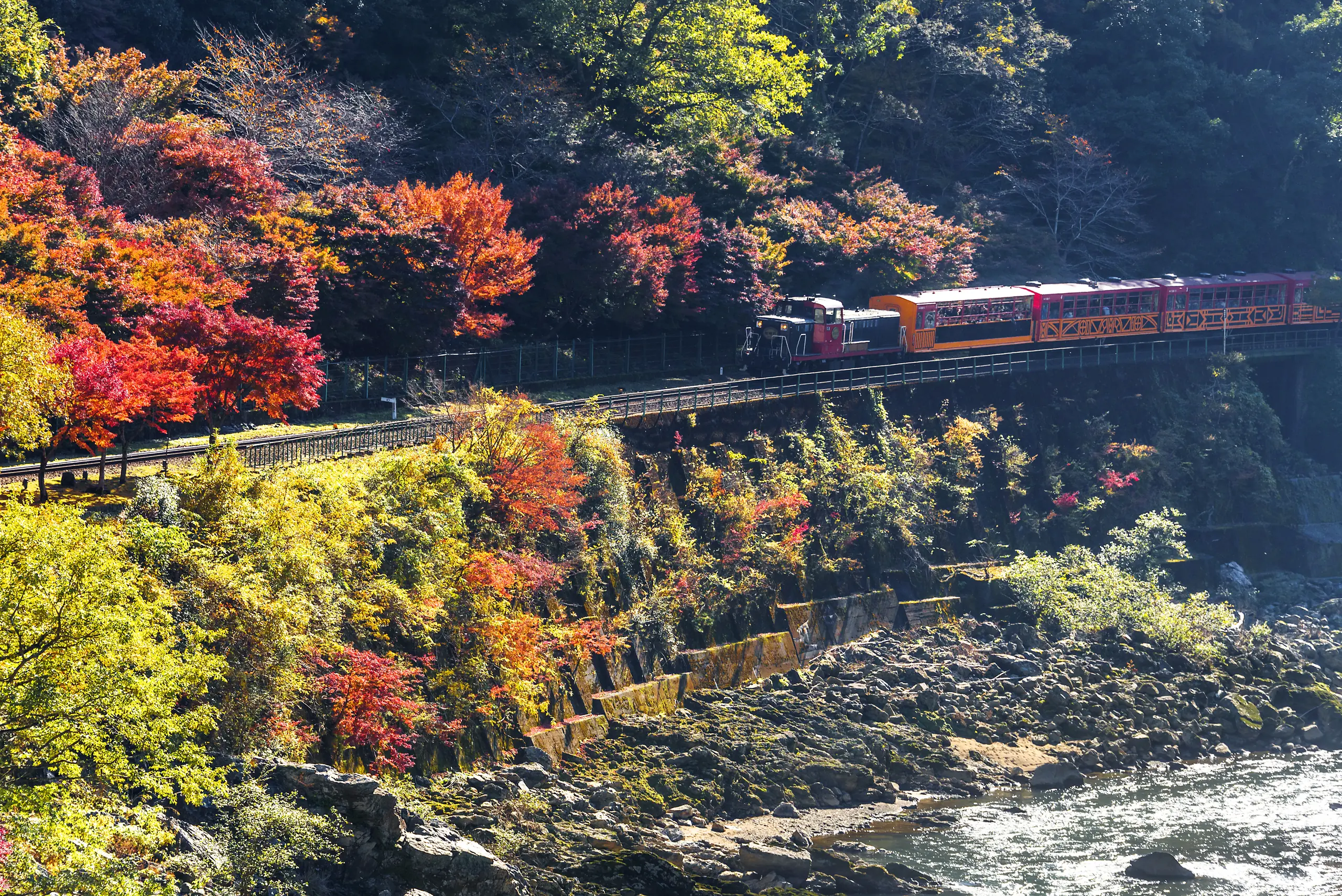
The Sagano Romantic Train follows the Hozugawa Gorge between Torokko Saga and Torokko Kameoka. It’s a short journey of around 25 minutes, but the river, steep wooded slopes and bends in the valley make it an enjoyable one.
The scenery feels quite different from Eizan’s close-up maple tunnel. Here, the landscape opens up around the train, with views along the river and across the opposite hillside.
Seats go on sale online at midnight Japan time, one month before travel. Car No. 5, called The Rich, has no window glass, making it especially appealing for uninterrupted views. Of course, that also means little protection from rain or cold weather.
For autumn 2026, the railway’s Light Illusion Train is scheduled to operate from October 24 to December 29 on designated days. The current carriages are also due to retire on December 29, 2026. The operator’s website has the latest information on illuminated departures.
The ride is easy to combine with time in Arashiyama, though you’ll still need to plan your journey back from Kameoka.
Reference: Sagano Scenic Railway (tickets and FAQ).
Read more: Kyoto Autumn Foliage.
Hakone Tozan Railway, Kanagawa: Mountains Within Reach of Tokyo
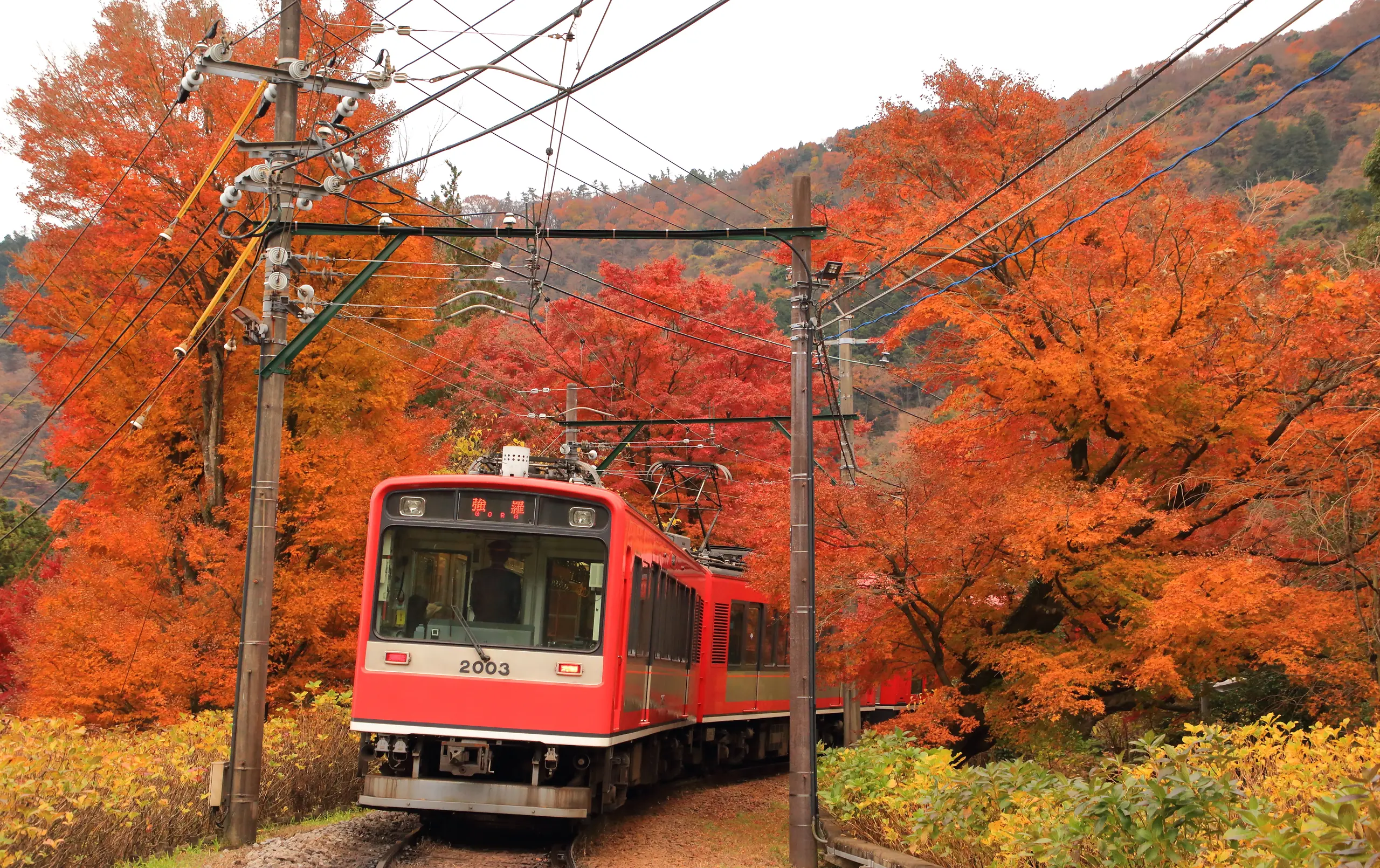
If you’re already planning a visit to Hakone, the Hakone Tozan Railway is worth including. The train climbs from Hakone-Yumoto to Gora, winding through wooded slopes and crossing mountain valleys along the way.
One of its distinctive features is the series of three switchbacks. The train changes direction at each one, allowing it to climb the steep terrain without taking a more direct route uphill.
The journey takes about 40 minutes, and there’s no need to reserve a seat on the regular mountain train. It’s covered by the Hakone Freepass, although not by the nationwide Japan Rail Pass.
The color of the trees changes with elevation, so the whole journey won’t necessarily be at peak foliage at the same time. Still, it’s a pleasant part of a Hakone visit, particularly if you’re spending a day or a night exploring the area.
Reference: Hakone Tozan Train – Hakone Navi.
Watarase Keikoku Railway: A River Valley at a Gentler Pace
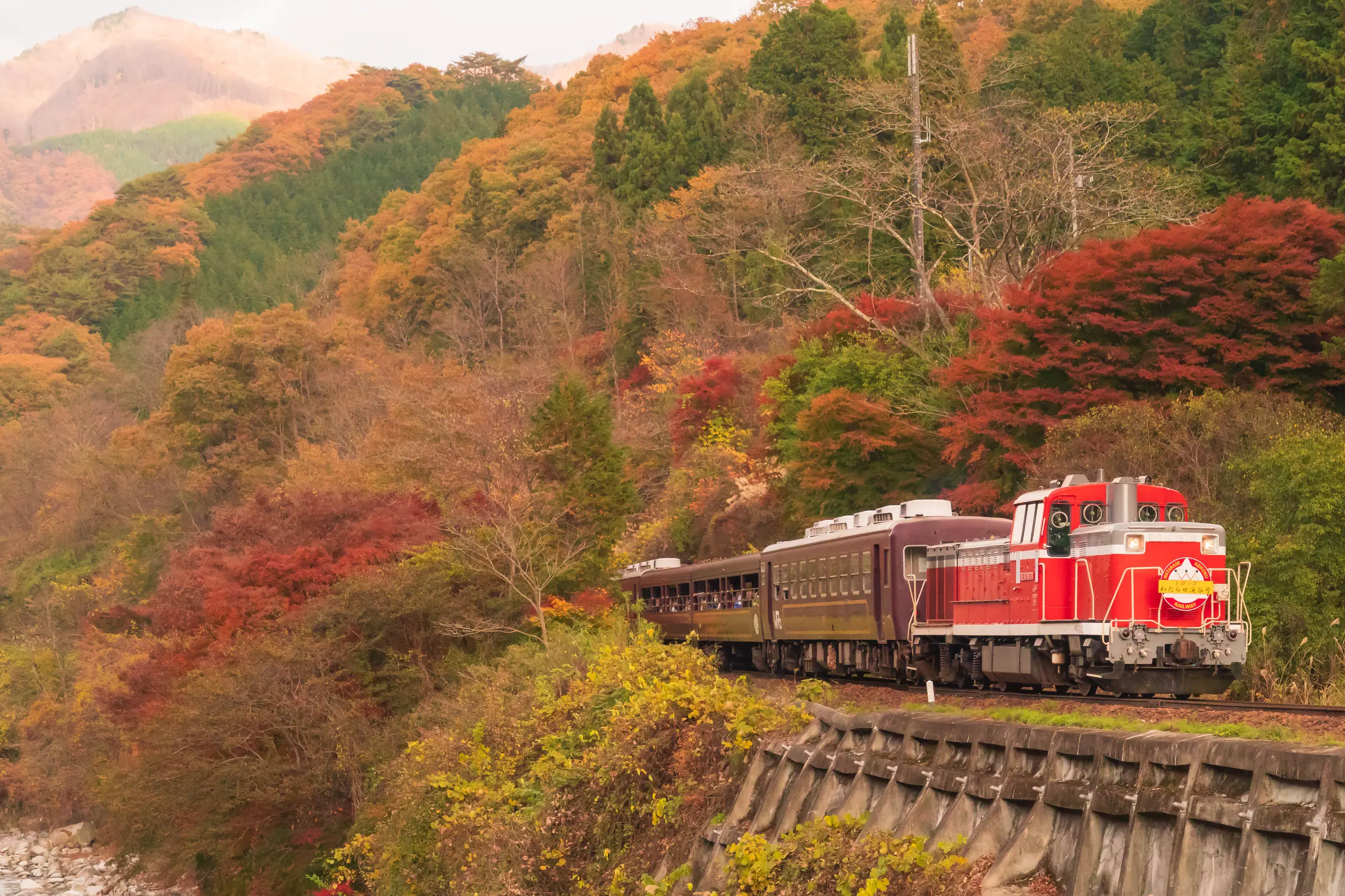
Running through Gunma and Tochigi, Watarase Keikoku Railway follows a river valley surrounded by wooded hills. Compared with Kyoto’s popular sightseeing trains, the appeal here is as much in the small stations and quieter countryside as in the autumn leaves.
Regular trains serve the line, but there are also special trolley services for visitors who want a more open-air experience.
The Torokko Watarase Keikoku and Torokko Wasshi trains operate on different routes and schedules. Trolley tickets cost extra on top of the regular fare, with the adult supplement raised to ¥700 for tickets sold from September 2026.
The open-air sections can get quite cold later in the season, so it’s worth checking which type of carriage you’ll be riding.
This railway is possible to reach from the Tokyo area, although connections make the journey longer than it might first appear. The return timetable is particularly important if you’re considering a day trip.
Reference: Watarase Keikoku Railway
Kurobe Gorge Railway, Toyama: Deep into the Mountains
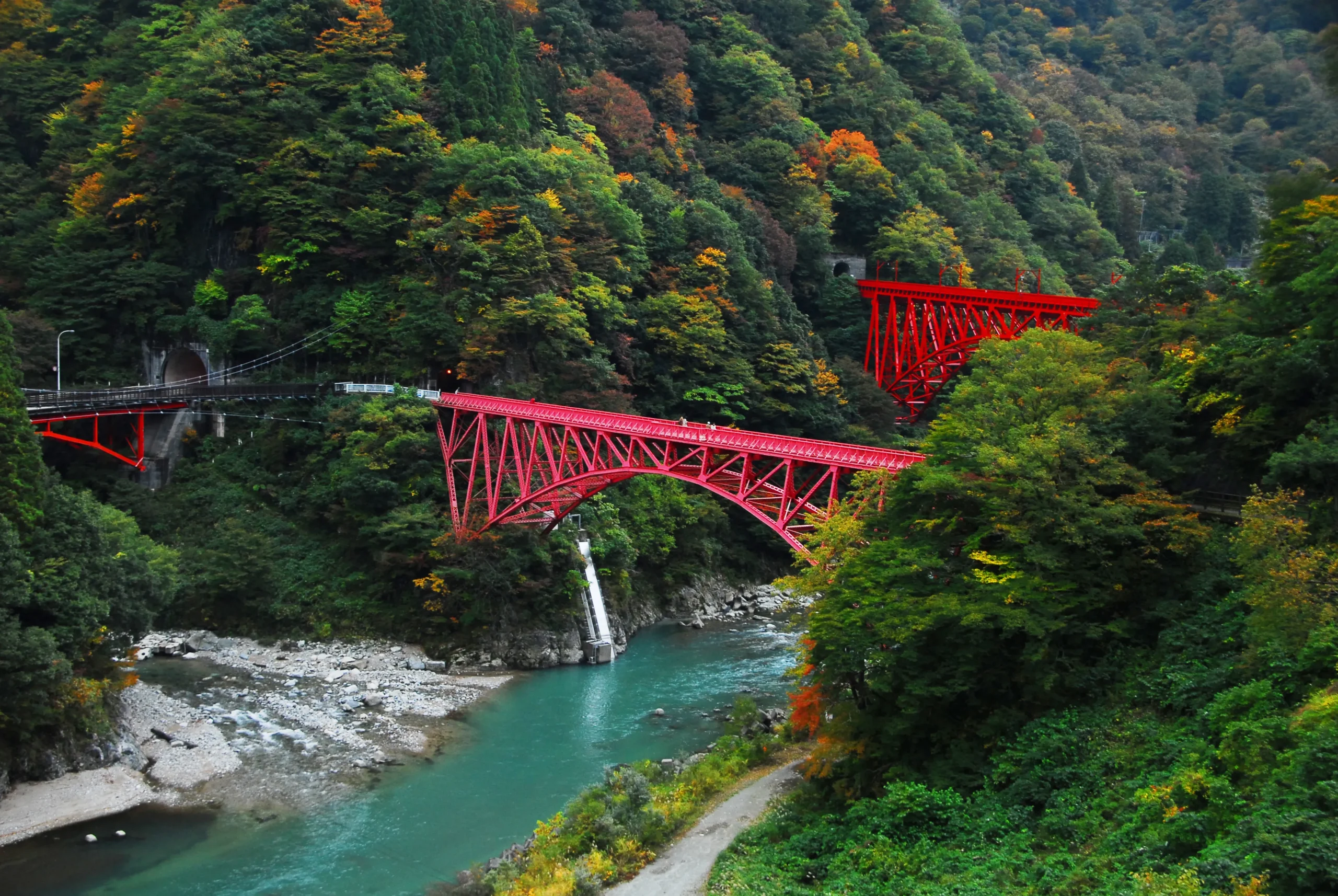
Kurobe Gorge Railway begins at Unazuki in Toyama Prefecture, where small trolley-style trains travel into a steep mountain gorge. Bridges carry the line above the river, while cliffs and wooded slopes rise on either side.
The journey to Keyakidaira takes around 80 minutes each way. Reaching Unazuki also takes time, so it makes sense to devote a substantial part of the day to this railway. Staying nearby, perhaps in Unazuki Onsen, makes the trip easier to enjoy.
After disruptions caused by the Noto Peninsula earthquake, full-line service to Keyakidaira resumed on October 1, 2026. Online reservations for the complete journey also resumed on October 7.
There is still restoration work around Keyakidaira, however, and some areas remain off-limits to visitors. The railway’s latest notices are essential reading if you plan to spend time at the terminus.
Carriage types also make a difference. Some are open to the mountain air, while others are enclosed. That choice becomes particularly noticeable as temperatures fall in autumn.
Reference: Kurobe Gorge Railway Official Website.
Tadami Line, Fukushima and Niigata: A Journey on an Ordinary Train
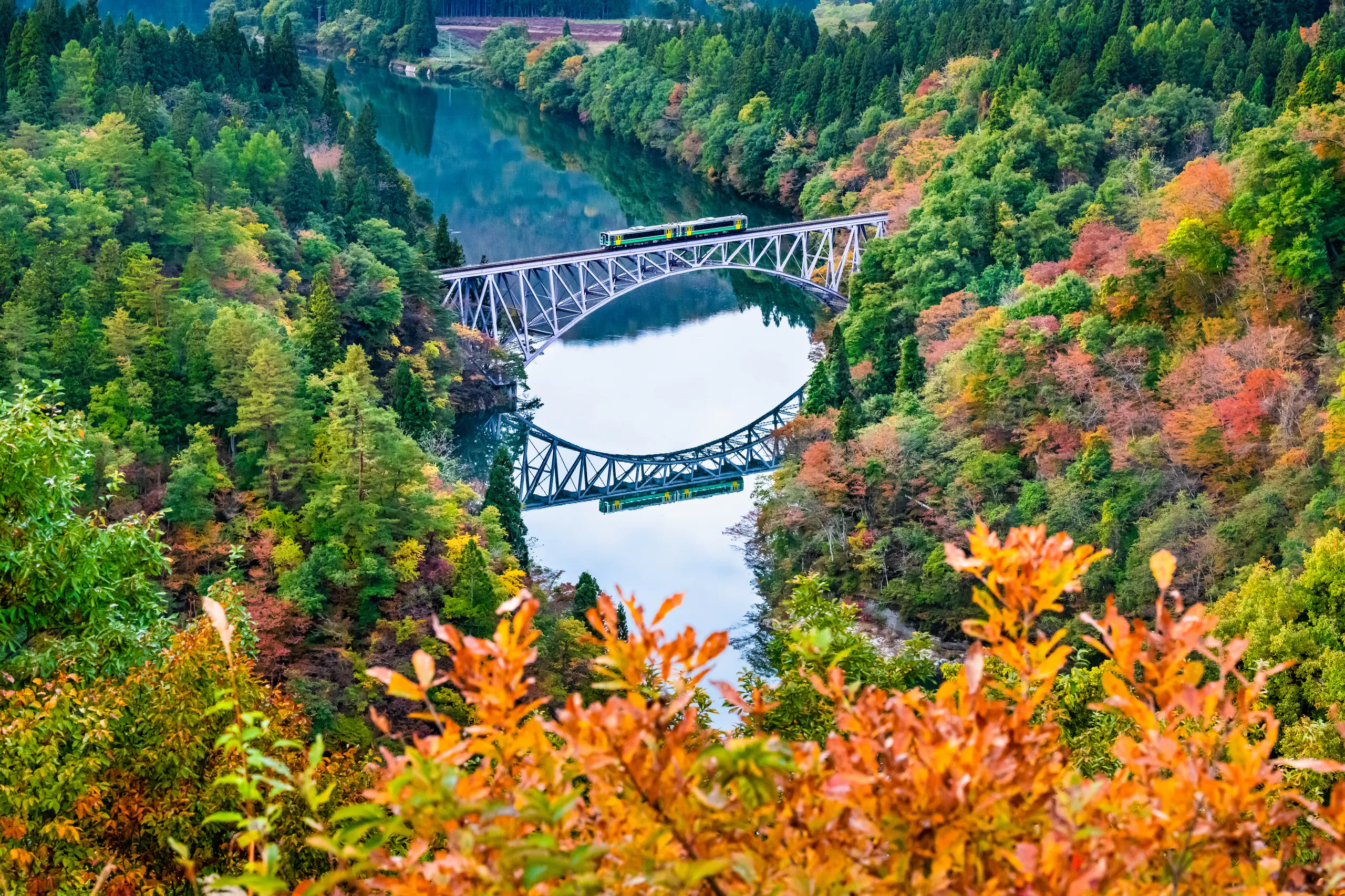
The Tadami Line is different from the dedicated sightseeing railways above. It’s an ordinary JR line connecting Aizu-Wakamatsu in Fukushima with Koide in Niigata, passing through the mountainous countryside of Oku-Aizu.
The train follows rivers, crosses bridges and passes small settlements along the way. There’s no special sightseeing carriage required; the appeal comes from watching the scenery change over the course of the journey.
You may already have seen photographs of a train crossing the First Tadami River Bridge with the surrounding mountains reflected in the water. Those famous views are photographed from outside the train. You won’t see the same composition from your seat, although the river crossings themselves are part of the experience.
The timetable needs particular attention. Services are infrequent, and a missed connection could mean a very long wait.
A quick round trip from Tokyo would leave little time to enjoy the scenery. Staying in the Aizu area makes the limited train schedule easier to work around. As a JR line, it is covered by the Japan Rail Pass under the usual conditions.
Reference: Tadami Line Official Site.
How to Plan Without Rushing
A scenic train’s advertised journey time tells only part of the story. Sagano takes about 25 minutes, for example, but most visitors will spend considerably longer in the Arashiyama area. Kurobe involves a longer train ride as well as the journey to Unazuki.
Ticket arrangements also differ. Ordinary services on Eizan, Hakone Tozan and the Tadami Line don’t require tourist-train reservations. Sagano has reserved seating, Watarase’s trolley trains need additional tickets, and booking ahead is advisable for Kurobe.
The nationwide Japan Rail Pass covers JR services such as the Tadami Line, but not the private railways in this guide. Regional passes have their own rules.
It’s also worth considering the carriage itself. Open-sided cars bring you closer to the outside air, which is lovely on a mild day but less appealing in cold rain. If you’re hoping to photograph a well-known bridge or river view, check whether the photograph was taken from the train or from a separate viewpoint.
Sagano by Train and River on a Guided Day
Of the six journeys above, Sagano is the one that most needs a plan for the way back from Kameoka. On November 27 and 30 and December 1, 2026, ENJYU JAPAN guides a day that answers that question with the river.
After a morning at Tenryu-ji, the Bamboo Grove and Nonomiya Shrine, you ride the Sagano Romantic Train in its original cars’ final season, then return through the same gorge by traditional wooden boat. Train seats and boat tickets are arranged in advance.
Check the tour page for the current inclusions, price, availability and operating conditions before making plans.
▶︎1-Day Kyoto Arashiyama Scenic Train & River Boat Tour
A Different Ride in Every Season
The tracks may stay the same, but the view through the window changes with the seasons. Eizan Railway’s Maple Leaf Tunnel is also worth seeing in late spring, when fresh green leaves form a canopy above the tracks and seasonal slow-running services let passengers enjoy the scenery. Hakone Tozan Railway is known for its hydrangeas in June and July as well as its autumn leaves. Along the Watarase Keikoku Railway, spring brings flowering peach trees to the valley. The Tadami Line looks different again in winter, when snow covers the surrounding mountains and riverbanks.
That’s part of what makes these railways worth returning to. A familiar journey can feel quite different when the landscape changes, and there may be things to notice that were easily missed the first time.
Autumn might be the reason to discover a scenic railway, but it doesn’t have to be the only time to enjoy it. Just remember that not every sightseeing train runs year-round. Kurobe Gorge Railway, for example, closes for much of the winter.
Choose the Journey That Fits Your Japan Trip
For travelers spending time in Kyoto, Eizan and Sagano are straightforward ways to include a scenic railway in the itinerary. Hakone makes sense for those already exploring the area around Tokyo.
Kurobe Gorge, Watarase and the Tadami Line call for more planning, but they also offer the chance to spend time in parts of Japan you might otherwise pass by.
If you’re trying to fit a scenic train around several destinations, ENJYU JAPAN can help put together a Tailor-Made Tour that takes travel time, seasonal conditions and your interests into account.